Best Brokers With High Leverage In The UK 2026



High leverage trading sounds attractive – I know I’ve traded with up to 1:2000 leverage. With a small amount of money, you can control a much larger position. This can mean bigger profits, but also much bigger losses, making it best suited to experienced traders.
Dig into the top brokers for trading with high leverage. We also break down the essentials you should know when opening a high-leverage account, including the limits and trade-offs.
UK Brokers With The Highest Leverage
-


Tickmill is a worldwide broker regulated by respected authorities like CySEC and FCA. It has attracted hundreds of thousands of traders, executing over 530 million trades. Its edge lies in sophisticated tools, informative resources, and competitive fees.
Leverage: 1:1000
Instruments Regulator Platforms Forex, CFDs, stocks, indices, commodities, cryptocurrencies, futures, options, bonds FCA, CySEC, FSA, DFSA, FSCA Tickmill Webtrader, MT4, MT5, TradingView Min. Deposit Min. Trade Leverage $100 0.01 Lots 1:1000 -
HYCM, authorised by four global entities including the FCA, is an online broker. It provides short-term CFD trading on forex, shares, commodities, indices, ETFs, and Bitcoin. The broker supports MT4, MT5, and Trading Central analysis.
Leverage: 1:301:500
Instruments Regulator Platforms CFDs, Forex, Stocks, Indices, Commodities, ETFs FCA, DFSA HYCM Trader, MT4, MT5, TradingCentral Min. Deposit Min. Trade Leverage $20 0.01 Lots 1:301:500 -
Established in 1974, IG is a unit of IG Group Holdings Plc, listed on the LSE as IGG. It provides access to over 17,000 markets through intuitive platforms and apps. For half a century, IG has remained an industry leader, excelling in all vital aspects for traders.
Leverage: 1:30 (Retail), 1:222 (Pro)
Instruments Regulator Platforms CFDs (not in US), Forex, Stocks, Indices, Commodities, ETFs, Futures, Options, Crypto, Spread Betting (UK only) CFTC, NFA, FCA, BaFin, ASIC, FINMA, MAS, JFSA, FMA, DFSA, BMA Web, L2 Dealer, MT4, TradingView, AutoChartist, TradingCentral, ProRealTime Min. Deposit Min. Trade Leverage $0 0.01 Lots 1:30 (Retail), 1:222 (Pro) -
Established in Poland in 2002, XTB caters to over a million clients worldwide. This forex and CFD broker offers a robust regulatory framework, a diverse range of assets, and prioritises trader satisfaction. It provides an intuitive proprietary platform equipped with excellent tools to support aspiring traders.
Leverage: 1:30
Instruments Regulator Platforms CFDs on shares, Indices, ETFs, Raw Materials, Forex currencies, cryptocurrencies, Real shares, Real ETFs FCA, CySEC, KNF, DFSA, FSC, SCA, CMF, Bappebti xStation Min. Deposit Min. Trade Leverage $0 0.01 Lots 1:30 -
Spreadex, regulated by the FCA, provides spread betting across 10,000+ CFD instruments, including 60 forex pairs. Traders have the option to engage in short-term positions on sporting events as well. With a history exceeding 20 years, the company has earned numerous accolades.
Leverage: 1:30
Instruments Regulator Platforms Forex, CFDs, Indices, Commodities, Stocks, Crypto, Bonds, Interest Rates, ETFs, Options, Spread Betting FCA Spreadex Platform, TradingView, AutoChartist Min. Deposit Min. Trade Leverage £0 (but £5 minimum for standard payment methods) £0.01 1:30 -
Trade Nation is a leading FX and CFD broker regulated in the UK and Australia, among other places. The company provides competitively priced fixed and variable spreads on over 1,000 assets. Traders benefit from advanced platforms and comprehensive training materials. Additionally, the Signal Centre offers valuable trade ideas.
Leverage: 1:30
Instruments Regulator Platforms CFDs, Forex, Indices, Shares, Commodities, Futures, Bonds, Spread Betting (UK and Ireland only), Cryptos (Bahamas entity only) FCA, ASIC, CMVM , FSCA, SCB, FSA TN Trader, MT4, TradingView Min. Deposit Min. Trade Leverage $0 0.1 Lots 1:30 -
Interactive Brokers (IBKR) stands as a leading brokerage, offering access to 170+ markets in 40 nations alongside extensive investment services. With 40+ years in finance, this Nasdaq-listed entity complies with regulations from the SEC, FCA, CIRO, and SFC, ensuring global trustworthiness in trading.
Leverage: 1:30
Instruments Regulator Platforms Stocks, Options, Futures, Forex, Funds, Bonds, ETFs, Mutual Funds, Cryptocurrencies, CFDs SEC, FINRA, CFTC, NFA, CIRO, FCA, CBI, ASIC, SFC, SEBI, JFSA, MAS Trader Workstation (TWS), IBKR Desktop, GlobalTrader, Mobile, Client Portal, AlgoTrader, OmniTrader, TradingView, eSignal, TradingCentral, ProRealTime, Quantower Min. Deposit Min. Trade Leverage $0 $1 1:30
 Tickmill
 HYCM
HYCM IG
IG XTB
XTB Spreadex
 Trade Nation
 Interactive Brokers
Safety Comparison
Compare how safe the Best Brokers With High Leverage In The UK 2026 are and what features they offer to protect traders.
| Broker | Trust Rating | FCA Regulated | Negative Balance Protection | Guaranteed Stop Loss | Segregated Accounts |
|---|---|---|---|---|---|
| Tickmill | ✔ | ✘ | ✘ | ✔ | |
| HYCM | ✔ | ✔ | ✘ | ✘ | |
| IG | ✔ | ✔ | ✔ | ✔ | |
| XTB | ✔ | ✔ | ✘ | ✔ | |
| Spreadex | ✔ | ✔ | ✔ | ✔ | |
| Trade Nation | ✔ | ✔ | ✘ | ✔ | |
| Interactive Brokers | ✔ | ✔ | ✘ | ✔ |
Payments Comparison
Compare which popular payment methods the Best Brokers With High Leverage In The UK 2026 support and whether they have trading accounts denominated in British Pounds (GBP).
| Broker | GBP Account | Debit Card | Credit Card | Neteller | Skrill | Apple Pay |
|---|---|---|---|---|---|---|
| Tickmill | ✔ | ✘ | ✘ | ✔ | ✔ | ✘ |
| HYCM | ✔ | ✘ | ✘ | ✔ | ✔ | ✘ |
| IG | ✔ | ✔ | ✔ | ✘ | ✘ | ✘ |
| XTB | ✔ | ✔ | ✔ | ✔ | ✔ | ✘ |
| Spreadex | ✔ | ✔ | ✔ | ✘ | ✘ | ✘ |
| Trade Nation | ✔ | ✔ | ✔ | ✘ | ✔ | ✘ |
| Interactive Brokers | ✔ | ✘ | ✘ | ✘ | ✘ | ✘ |
Mobile Trading Comparison
How good are the Best Brokers With High Leverage In The UK 2026 at mobile trading using apps or other mobile interfaces.
| Broker | Mobile Apps | iOS Rating | Android Rating | Smart Watch App |
|---|---|---|---|---|
| Tickmill | ✔ | ✘ | ||
| HYCM | iOS & Android | ✘ | ||
| IG | iOS & Android | ✔ | ||
| XTB | iOS & Android | ✔ | ||
| Spreadex | iOS & Android | ✘ | ||
| Trade Nation | iOS & Android | ✘ | ||
| Interactive Brokers | iOS & Android | ✔ |
Beginners Comparison
Are the Best Brokers With High Leverage In The UK 2026 good for beginner traders, that might want an affordable setup to get started, along with good support and educational resources?
| Broker | Demo Account | Minimum Deposit | Minimum Trade | Support Rating | Education Rating |
|---|---|---|---|---|---|
| Tickmill | ✔ | $100 | 0.01 Lots | ||
| HYCM | ✔ | $20 | 0.01 Lots | ||
| IG | ✔ | $0 | 0.01 Lots | ||
| XTB | ✔ | $0 | 0.01 Lots | ||
| Spreadex | ✘ | £0 (but £5 minimum for standard payment methods) | £0.01 | ||
| Trade Nation | ✔ | $0 | 0.1 Lots | ||
| Interactive Brokers | ✔ | $0 | $1 |
Advanced Trading Comparison
Do the Best Brokers With High Leverage In The UK 2026 offer features that allow for more advanced trading strategies?
| Broker | Automated Trading | Pro Account | Leverage | VPS | AI | Low Latency | Extended Hours |
|---|---|---|---|---|---|---|---|
| Tickmill | ✔ | ✘ | 1:1000 | ✘ | ✘ | ✘ | ✘ |
| HYCM | Expert Advisors (EAs) on MetaTrader | ✔ | 1:301:500 | ✘ | ✘ | ✔ | ✘ |
| IG | Expert Advisors (EAs) on MetaTrader, build your own on ProRealTime | ✔ | 1:30 (Retail), 1:222 (Pro) | ✔ | ✔ | ✔ | ✔ |
| XTB | - | ✔ | 1:30 | ✘ | ✘ | ✔ | ✘ |
| Spreadex | ✘ | ✔ | 1:30 | ✘ | ✘ | ✔ | ✔ |
| Trade Nation | Expert Advisors (EAs) on MetaTrader | ✘ | 1:30 | ✘ | ✘ | ✘ | ✘ |
| Interactive Brokers | TWS API | ✘ | 1:30 | ✘ | ✔ | ✔ | ✔ |
Detailed Rating Comparison
Use this heatmap to compare our detailed ratings for all of the Best Brokers With High Leverage In The UK 2026.
| Broker | Trust | Platforms | Mobile | Assets | Fees | Accounts | Support | Research | Education |
|---|---|---|---|---|---|---|---|---|---|
| Tickmill | |||||||||
| HYCM | |||||||||
| IG | |||||||||
| XTB | |||||||||
| Spreadex | |||||||||
| Trade Nation | |||||||||
| Interactive Brokers |
Our Take On Tickmill
"Tickmill stands out for traders, particularly with the Raw account, offering nearly no pip spreads and exceptionally swift order execution."Tobias Robinson
Reviewer
Pros
- Drawing from our trading experience, Tickmill consistently executes orders rapidly—averaging around 59 milliseconds—with minimal slippage or requotes. This reliability ensures traders can trust their entry and exit prices without delay, safeguarding against potential costs in fast markets.
- With the Raw Spread account, spreads are remarkably tight, occasionally reaching zero pips, complemented by a clear per-trade commission. This arrangement minimises trading costs, offering a crucial benefit for frequent trades and eliminating hidden fees that erode profits.
- Tickmill holds licences from regulators such as the FCA and CySEC, ensuring tangible advantages. Client funds are segregated in secure accounts, and negative balance protection is in place. This guarantees you won't owe more than your deposit, offering reassurance during market fluctuations.
Cons
- If you prefer cTrader's interface and advanced order options, you won't find them here. Tickmill utilises MetaTrader 4 and 5, TradingView, and its own platform but lacks cTrader. This may hinder those who depend on cTrader's features or tools like cTrader Copy.
- Tickmill targets forex pairs, select stock CFDs, indices, and limited commodities. If you prefer trading across diverse asset classes like cryptocurrencies or a wider array of stocks, options here are restricted versus brokers offering thousands of instruments.
Our Take On HYCM
"Traders seeking a multi-asset broker with robust platform support, additional analysis tools, and stringent regulation should consider HYCM. The competitive raw-spread accounts benefit scalpers and high-volume traders."Tobias Robinson
Reviewer
Pros
- Instead of a fixed leverage cap, HYCM's model automatically decreases leverage as position volume grows, safeguarding traders from excessive exposure on large trades without manual margin adjustments. Typical retail brokers set a static leverage limit, leaving risk control entirely to traders. The dynamic model provides a structural risk safeguard, especially beneficial for novice traders gradually expanding positions.
- While most retail CFD brokers offer gold, oil, and silver, HYCM goes further by providing agricultural soft commodities. This is available from a standard account without requiring a higher minimum deposit or professional status. For those seeking true commodity diversification beyond metals and energy, such access is unusually available at this level.
- HYCM, established in 1977, has endured events like Black Wednesday, the 2008 financial crisis, the SNB shock, and various FCA regulatory changes that saw many rivals restructure or exit. While many brokers recently obtained FCA regulation, HYCM's longstanding compliance spans a full generation of retail traders. This signifies a uniquely established track record.
Cons
- The limitation appears solely in HYCM's terms. Investors opening a Fixed or Classic account, creating a short-term strategy, and executing rapid trades risk having profits seized and accounts suspended without notice. The Raw account allows more precise trading, but the threshold between allowed and forbidden trading frequency is not clearly defined on hycm.com.
- HYCM still uses the same MT4, MT5, and proprietary mobile app infrastructure from five years ago. There's no TradingView, cTrader, social trading, copy trading, or PAMM available. Despite having nearly 50 years of history and FCA regulation, the lack of platform development shows little focus on technology investment. This is crucial as rivals integrate TradingView and expand social trading to appeal to new retail traders.
- Brokers such as eToro, Pepperstone, and IC Markets have created client acquisition channels centred on social and copy trading. HYCM lacks this approach. This leaves new traders wishing to invest in proven strategies and experienced traders aiming to profit from managing external capital without a platform. Consequently, HYCM fails to serve this segment of retail traders.
Our Take On IG
"IG offers a complete package: an easy-to-use web platform, top-tier beginner education, enhanced charting via TradingView, up-to-date data, and strong trade execution for seasoned traders."Tobias Robinson
Reviewer
Pros
- The web-based platform supports traders at every level, offering advanced charting tools and real-time market data vital for trading. Additionally, IG now includes TradingView integration.
- The IG app provides an excellent mobile trading experience with an intuitive design, earning it the Runner Up position in our 'Best Trading App' award.
- IG secured a crypto asset license from the FCA, enabling its return to the UK market. It now offers buying, selling, and storage services for over 55 digital tokens with fees starting at 1.49%, all under FCA regulation.
Cons
- Beginners may find IG's fees complicated, as they vary depending on the trades or services. This could cause confusion and unexpected costs.
- IG imposes a monthly inactivity fee of $12 to $18 after two years, discouraging occasional investors.
- IG has ended its swap-free account, diminishing its attractiveness to Islamic traders.
Our Take On XTB
"XTB excels for novice traders with its superb xStation platform, minimal trading costs, no required deposit, and outstanding educational resources, many of which are fully integrated into the platform." William Berg
Reviewer
Pros
- XTB offers a superb array of educational resources, such as training videos and articles, embedded within the platform to assist traders of all experience levels.
- Top-notch customer support, available 24/5, includes a welcoming live chat with response times under two minutes during tests.
- In 2026, XTB expanded its asset offerings and markets. It introduced options trading in Spain and Germany, launched spot cryptocurrencies in select regions, and unveiled Investment Plans 2.0. These enhanced plans now feature more pre-built options, including sectors like Defence, a user-friendly interface, and increased flexibility to mix stocks and ETFs within individual plans.
Cons
- XTB lacks a raw spread account, a feature increasingly offered by competitors such as Pepperstone. This omission might not satisfy traders seeking the most competitive spreads.
- XTB has stopped supporting MT4, restricting traders to its own platform, xStation. This decision may discourage experienced traders accustomed to using the MetaTrader suite.
- Trading fees are competitive, with average EUR/USD spreads of about 1 pip. However, they are not as low as the most affordable brokers, such as IC Markets. Additionally, an inactivity fee applies after a year.
Our Take On Spreadex
"Spreadex attracts UK traders keen on spread betting in financial markets and traditional sports wagers. It offers low fees for short trades, and spread bet profits are tax-free. With a robust charting platform and no minimum deposit, it's easy to begin."Tobias Robinson
Reviewer
Pros
- Our fee analysis shows the EUR/USD at 0.6 pips during off-peak hours. FTSE and S&P 500 spreads remain competitively priced for spread-betting brokers. Trading costs are reasonable.
- From testing, the platform facilitates seamless active trading. Features like one-click trading, watchlists, and saved layouts functioned effectively, including Force Open. Constructing a tidy workspace and handling short-term trades proved straightforward.
- Over 10,000 instruments and superior access to AIM small-caps are available, including exclusive offerings not found with larger brokers. This provides UK-centric traders with enhanced opportunities in niche small-cap configurations.
Cons
- Spreadex requires real funds initially, offering no demo accounts. Few spread betting brokers neglect to accommodate new traders in this manner.
- CFDs, financial spread bets, sports, and casino activities are combined in one account balance. For serious traders, this means non-trading losses can immediately decrease the margin for trading positions.
- Execution is satisfactory, though not top-tier. Tests showed 0.2–0.4 pip slippage in stable liquid markets, but news-induced volatility increased some fills to around 1 pip. Thinner AIM stocks often experienced 2–4 point slippage.
Our Take On Trade Nation
"Trade Nation caters to discretionary traders aiming to speculate on major indices like the US 500 or liquid FX pairs, with the certainty of fixed spreads. Our tests revealed the TN Trader's fixed spreads to be advantageous, especially during economic announcements, thanks to its dependable charting and capped spreads."Tobias Robinson
Reviewer
Pros
- The broker expanded into Europe by launching regulated online trading services, after securing authorization from Portugal's CVMV, enhancing safety measures for European residents.
- During tests of the TN Trader account in standard market conditions, fixed spreads remained stable. Major forex pairs experienced prompt order fills, albeit with slight entry level drift as prices fluctuated between click and execution.
- The demo includes a £5,000 practice account, and you can request a personalised platform walkthrough via callback. This level of individual assistance is uncommon.
Cons
- There is no raw or ECN pricing tier, often favoured by traders. Regardless of your deposit or trading volume, you receive the same fixed (or variable on MT4) pricing as novices, rendering it particularly unsuitable for scalpers.
- Offshore SCB and FSA firms offer retail investors leverage up to 1:200 and 1:500. In contrast, regions like the UK, Europe, and Australia cap leverage at 1:30. Thus, an FSA client can access 16 times more exposure than a UK retail client on identical trades. However, this comes with reduced oversight and no compensation schemes.
- Withdrawals may take up to five business days, aligning with industry norms. However, this is slower compared to the 1-3 days many brokers now offer to minimise complaints from retail investors.
Our Take On Interactive Brokers
"Interactive Brokers ranks highly for seasoned traders due to its robust charting platforms, live data, and bespoke layouts via the new IBKR Desktop app. Its competitive pricing and sophisticated order choices appeal to traders, and its wide equity options are industry-leading."Tobias Robinson
Reviewer
Pros
- A wide range of third-party research subscriptions, both free and paid, are available for traders. Additionally, by subscribing to Toggle AI, traders can receive commission rebates from IBKR.
- DayTrading.com awarded Interactive Brokers 'Best US Broker' for 2025, highlighting its dedication to US traders, extremely low margin rates, and affordable global market access.
- IBKR consistently offers unparalleled access to global equities, with thousands of shares available across over 100 market centres in 24 countries, including the recently added Saudi Stock Exchange.
Cons
- TWS has a steep learning curve, making it difficult for newcomers to navigate and grasp its features.
- IBKR offers a variety of research tools, but their inconsistent placement across trading platforms and the 'Account Management' webpage creates a confusing experience for users.
- You are limited to a single active session per account, meaning you cannot use both your desktop programme and mobile app at the same time. This restriction can occasionally lead to a frustrating experience for traders.
How Investing.co.uk Chose The Best High-Leverage Brokers
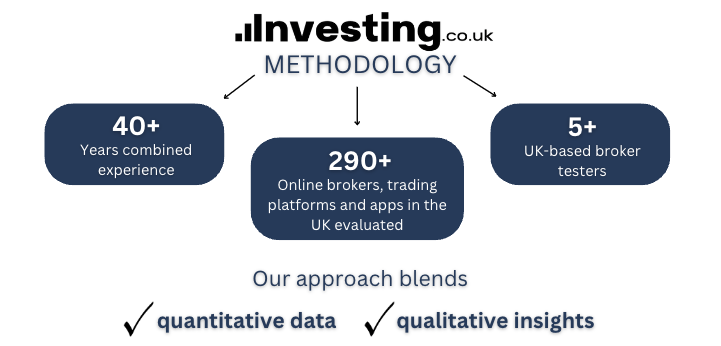
To create our rankings, we looked beyond just the headline leverage figures. While we recorded the maximum leverage available on key asset classes, we also considered each broker’s reputation and safeguards designed to protect traders.
Factors we assessed included:
- Availability of risk management tools such as stop-loss orders
- Whether brokers offer negative balance protection to limit losses
- Use of segregated client accounts to safeguard funds
- Overall trust and regulatory standing
All brokers were then ranked by our overall ratings system, which covers more than 200 data points including pricing, platform reliability, and customer support. This ensures our recommendations balance the appeal of higher leverage with trader safety and service quality.
What To Consider When Picking A High Leverage Broker
If you’ve decided you want a high-leverage account, here are the main factors to check:
- Regulation & Safety – First, ask yourself: do you want FCA protection or not? FCA brokers mean security but capped leverage. Offshore brokers mean high leverage but less protection. Be clear on which trade-off you’re choosing.
- Negative Balance Protection – High leverage means you can lose money fast. Negative balance protection stops you from owing more than your deposit. FCA brokers must provide this. Offshore brokers may not. If you go offshore, be sure to check this rule carefully.
- Margin Requirements – Margin is the deposit you need to open a position. High leverage lowers margin, but not all brokers set it the same way. Compare margin requirements for the instruments you trade most often.
- Stop-Out Levels – Stop-out is when the broker automatically closes your trades to protect itself from potential losses. Some brokers close positions when your margin level hits 20%. Others wait until 50%. The higher the stop-out level, the earlier your trades get cut off. This matters a lot when trading with high leverage.
- Professional Account Options – If you qualify for a professional trading account, you may obtain leverage of up to 1:500 while working with an FCA-regulated broker. To do this, you usually need:
- Proof of frequent large trades.
- A portfolio worth over €500,000.
- Relevant professional experience.
- Not everyone can qualify, but if you do, it gives you higher leverage without losing FCA protections.
- Instruments You Trade – Leverage is not the same across all markets. Major forex pairs usually get the best levels. Indices, metals, and commodities get lower. Stocks and crypto have the lowest. If you mainly trade one type of instrument, look at the leverage rules specific to that asset.
What High Leverage Really Means
Leverage is borrowing money from your broker to open a position larger than your deposit. If you put in £200 and your broker gives you 1:30 leverage, you can trade £6,000. At 1:500, that same £200 controls £100,000.
It works like a double-edged sword. A small price move in your favour can grow your account quickly. But a small move against you can wipe it out just as fast.
For example:
- With 1:30 leverage, a 1% move against you on a £6,000 position means a £60 loss. That’s about 30% of your £200 deposit.
- With 1:500 leverage, a 1% move against you on a £100,000 position means a £1,000 loss. That’s five times your deposit—leaving you owing money if there’s no protection.
So, high leverage is not about easy profits. It’s about increased risk. This is the first thing to accept before looking at brokers.

Trading forex on eToro with leverage lets you control larger positions with less capital
FCA Rules On Leverage In The UK
In the UK, the Financial Conduct Authority (FCA) sets leverage limits for retail traders. These are:
- 1:30 for major forex pairs (like GBP/USD or EUR/USD).
- 1:20 for minor forex pairs, gold, and major indices.
- 1:10 for other commodities.
- 1:5 for individual stocks.
- 1:2 for cryptocurrencies.
This means if you open an account with an FCA-regulated broker as a retail trader, these are the maximum levels you’ll see.
The rules came into effect to protect traders. Before the cap, many people were trading with 1:500 or 1:1000 leverage and losing more than they had deposited. The FCA stepped in to reduce that risk.
The only way around leverage limits within the UK is to qualify as a professional trader. That requires proof of trading experience, a portfolio of over €500,000, or financial industry experience. Even then, not every broker will approve you.
Offshore Brokers & Higher Leverage
Due to these rules, many UK traders turn to offshore brokers. Some of these firms offer leverage as high as 1:2000.
The trade-off is safety. Offshore brokers are not subject to FCA regulation. This means:
- You won’t have access to the Financial Ombudsman if something goes wrong.
- You may not get negative balance protection.
- Your money may not be held in the same secure way as with an FCA broker.
Some traders accept this risk for the flexibility that higher leverage offers. Others prefer to stay within FCA protection, even if leverage is lower. The right choice depends on how much you value safety versus access to bigger leverage.
Who High Leverage Suits
High leverage is not for every trader. It’s most suited for:
- Traders who use strict risk controls.
- People who place stop-loss orders every time.
- Short-term or day traders who need flexibility.
It’s not ideal for beginners or for individuals who hold trades for the long term. Even small mistakes can quickly empty an account.
Many experienced traders use lower leverage than what is offered. For example, even with a 1:500 leverage ratio available, you might only use a 1:10 or 1:20 leverage on most trades.
The point of access to high leverage is flexibility, not necessarily using it to the max.
My first run with 1:2000 leverage felt powerful, but a single bad move wiped me out quickly. I learned it’s less about big wins and more about control. Now I use high leverage sparingly, only when I’m confident of the trade.
Risks You Can’t Ignore
With high leverage, the risks are bigger than many traders expect. These include:
- Bigger losses: A small market move can wipe out your balance.
- Margin calls: Your broker may require additional funds to maintain open positions.
- Forced liquidation: Positions can be closed automatically when the margin falls below a certain level.
- Owing money: If you use an offshore broker without negative balance protection, losses can exceed your deposit.
This is why risk management is essential. Before you open a trade, decide how much you’re willing to lose and stick to it.
Bottom Line
In the UK, retail traders are capped at 1:30 on forex and even less on other markets. If you want more, you either need to qualify as a professional or use an offshore broker.
The choice depends on what matters more to you—safety or access to higher leverage. FCA brokers mean security but lower limits. Offshore brokers mean higher leverage but less protection.
Whichever you choose, remember that leverage is a tool. It can work for you or against you.
The best broker for high leverage is not simply the one with the biggest number. It’s the one that matches your trading style, risk tolerance, and the markets you trade.