

Looking to grow your capital without trading a single chart? PAMM (Percentage Allocation Management Module) accounts offer a hands-free way to invest by letting seasoned traders manage your funds—while you sit back and track the results.
Following our hands-on tests, we reveal the best brokers offering PAMM accounts so that you can invest smarter with confidence.
Top PAMM Account Brokers
Investing involves risk. Asset prices can move rapidly and you may lose some or all money invested. Never invest more than you can afford to lose.Advertising disclosure
Our picks at a glance
- 1 Pepperstone Top score: Platforms 4.8 Info Visit Pepperstone
- 2 Vantage Top score: Trust 4.3 Info Visit Vantage
- 3 Tickmill Top score: Trust 4.0 Info Visit Tickmill
- 4 FxPro Top score: Mobile 4.4 Info Visit FxPro
- 5 Axi Top score: Mobile 3.7 Info Visit Axi
- 6 Fortrade Top score: Mobile 3.3 Info Visit Fortrade
-
Our top pick
Founded in Australia in 2010, Pepperstone is a leading forex and CFD broker serving over 830,000 clients globally. It provides access to 1,400+ instruments through MT4, MT5, cTrader and TradingView, with low, transparent pricing. Regulated by the FCA, ASIC and CySEC, Pepperstone offers a secure trading environment for all experience levels.
- Instruments
- CFDs, Forex, Currency Indices, Stocks, Indices, Commodities, ETFs, Crypto CFDs (only Pro clients), Spread Betting
- Regulator
- FCA, ASIC, CySEC, BaFin, DFSA, SCA, SCB, CMA-Kenya
- Platforms
- Pepperstone Trading Platform, MT4, MT5, cTrader, TradingView
- Min. Deposit
- $0
- Min. Trade
- 0.01 Lots
- Leverage
- 1:30 (Retail), 1:500 (Pro)
CFDs and FX are complex instruments and come with a high risk of losing money rapidly due to leverage. 73.6% of retail investor accounts lose money when trading CFDs.
-
Founded in 2009, Vantage provides access to over 1,000 short-term CFD products for millions of clients. Trade Forex CFDs from 0.0 pips via RAW accounts on TradingView, MT4 or MT5. FCA-regulated, Vantage segregates client funds and offers social trading tools for copy traders.
- Instruments
- CFDs, Forex, Stocks, Indices, Commodities, ETFs, Bonds, Spread betting
- Regulator
- FCA, ASIC, FSCA, VFSC, CIMA
- Platforms
- ProTrader, MT4, MT5, TradingView, TradingCentral, DupliTrade
- Min. Deposit
- $50
- Min. Trade
- 0.01 Lots
- Leverage
- 1:30
72.65% of accounts lose money when trading CFDs with this provider.
-
Tickmill is a worldwide broker regulated by respected authorities like CySEC and FCA. It has attracted hundreds of thousands of traders, executing over 530 million trades. Its edge lies in sophisticated tools, informative resources, and competitive fees.
- Instruments
- Forex, CFDs, stocks, indices, commodities, futures, options, bonds
- Regulator
- FCA, CySEC, FSA, DFSA, FSCA
- Platforms
- Tickmill Webtrader, MT4, MT5, TradingView
- Min. Deposit
- $100
- Min. Trade
- 0.01 Lots
- Leverage
- 1:30
-
Founded in 2006, FxPro is a respected NDD broker providing access to over 2,100 markets. Serving over 2 million global clients, it has won more than 145 industry awards for its trader-friendly conditions.
- Instruments
- CFDs, Forex, Stocks, Indices, Commodities, Futures, Spread Betting
- Regulator
- FCA, CySEC, SCB, FSA
- Platforms
- FxPro Edge, MT4, MT5, cTrader, AutoChartist, TradingCentral, DupliTrade, Quantower
- Min. Deposit
- $100
- Min. Trade
- 0.01 Lots
- Leverage
- 1:30 (Retail), 1:500 (Pro)
-
Founded in 2007, Axi is a forex and CFD broker operating under multiple regulations. Over the years, it has enhanced the trading experience by broadening its stock offerings, upgrading the Axi Academy, and launching a proprietary copy trading app.
- Instruments
- CFDs, Forex, Stocks, Indices, Commodities
- Regulator
- FCA, ASIC, FMA, DFSA, FSC
- Platforms
- Axi Copy Trading, MT4, AutoChartist
- Min. Deposit
- $0
- Min. Trade
- 0.01 Lots
- Leverage
- 1:30
72.4% of retail investor accounts lose money when trading CFDs with this provider
-
Fortrade is a well-regulated broker with oversight from authorities such as the FCA. The firm offers trading on diverse instruments like stocks, bonds, commodities, forex, indices, and ETFs. It provides competitive fees and supports both MetaTrader 4 and its own trading platform.
- Instruments
- Forex, CFDs, indices, shares, commodities, DMAs, ETFs, bonds
- Regulator
- FCA, ASIC, FSC, CIRO, DFSA, CySEC
- Platforms
- Fortrader Web, MT4, TradingCentral
- Min. Deposit
- $100
- Min. Trade
- 0.01 Lots
- Leverage
- 1:30 (varies by entity)
Compare
Safety Comparison
Compare how safe the Best Brokers With PAMM Accounts In The UK 2026 are and what features they offer to protect traders.
| Broker | Trust Rating | FCA Regulated | Negative Balance Protection | Guaranteed Stop Loss | Segregated Accounts |
|---|---|---|---|---|---|
 |
4.6 | ||||
 |
4.6 | ||||
 |
4.3 | ||||
 |
4.4 | ||||
 |
3.8 | ||||
 |
3.3 |
Payments Comparison
Compare which popular payment methods the Best Brokers With PAMM Accounts In The UK 2026 support and whether they have trading accounts denominated in British Pounds (GBP).
| Broker | GBP Account | Debit Card | Credit Card | Neteller | Skrill | Apple Pay |
|---|---|---|---|---|---|---|
|
||||||
|
||||||
|
||||||
|
||||||
|
||||||
|
Mobile Trading Comparison
How good are the Best Brokers With PAMM Accounts In The UK 2026 at mobile trading using apps or other mobile interfaces.
| Broker | Mobile Apps | iOS Rating | Android Rating | Smart Watch App |
|---|---|---|---|---|
|
iOS & Android | 4.4 | 4.1 | |
|
iOS & Android | 3.6 | 3.9 | |
|
iOS & Android | 4.9 | 3.4 | |
|
iOS & Android | 4.7 | 4.3 | |
|
iOS & Android | 3.6 | 4.2 | |
|
iOS & Android | 3.5 | 4.2 |
Beginners Comparison
Are the Best Brokers With PAMM Accounts In The UK 2026 good for beginner traders, that might want an affordable setup to get started, along with good support and educational resources?
| Broker | Demo Account | Minimum Deposit | Minimum Trade | Support Rating | Education Rating |
|---|---|---|---|---|---|
|
$0 | 0.01 Lots | 4.6 | 4.0 | |
|
$50 | 0.01 Lots | 3.8 | 4.0 | |
|
$100 | 0.01 Lots | 4.0 | 4.3 | |
|
$100 | 0.01 Lots | 4.0 | 4.0 | |
|
$0 | 0.01 Lots | 3.8 | 3.8 | |
|
$100 | 0.01 Lots | 3.3 | 3.3 |
Advanced Trading Comparison
Do the Best Brokers With PAMM Accounts In The UK 2026 offer features that allow for more advanced trading strategies?
| Broker | Automated Trading | Pro Account | Leverage | VPS | AI | Low Latency | Extended Hours |
|---|---|---|---|---|---|---|---|
|
Expert Advisors (EAs) on MetaTrader, cBots on cTrader | 1:30 (Retail), 1:500 (Pro) | |||||
|
Myfxbook AutoTrade, Expert Advisors (EAs) on MetaTrader | 1:30 | |||||
|
Expert Advisors (EAs) on MetaTrader | 1:30 | |||||
|
Expert Advisors (EAs) on MetaTrader, cBots on cTrader | 1:30 (Retail), 1:500 (Pro) | |||||
|
Expert Advisors (EAs) on MetaTrader, Myfxbook | 1:30 | |||||
|
Expert Advisors (EAs) on MetaTrader | 1:30 (varies by entity) |
Detailed Rating Comparison
Use this heatmap to compare our detailed ratings for all of the Best Brokers With PAMM Accounts In The UK 2026.
| Broker | Trust | Platforms | Mobile | Assets | Fees | Accounts | Support | Research | Education |
|---|---|---|---|---|---|---|---|---|---|
|
4.6 | 4.8 | 4.3 | 4.6 | 4.5 | 4.0 | 4.6 | 4.3 | 4.0 |
|
4.6 | 4.3 | 3.8 | 4.4 | 4.4 | 4.3 | 3.8 | 4.0 | 4.0 |
|
4.3 | 4.0 | 4.2 | 3.8 | 4.0 | 3.5 | 4.0 | 4.3 | 4.3 |
|
4.4 | 4.3 | 4.5 | 4.0 | 4.0 | 3.8 | 4.0 | 4.0 | 4.0 |
|
3.8 | 3.7 | 3.9 | 3.0 | 3.8 | 3.5 | 3.8 | 3.5 | 3.8 |
|
3.3 | 3.3 | 3.9 | 3.8 | 3.3 | 3.3 | 3.3 | 3.5 | 3.3 |
Our Take On Pepperstone
Pepperstone excels in trading with tight spreads, swift execution, and advanced charting for seasoned traders. Beginners enjoy zero minimum deposit, comprehensive educational materials, and outstanding 24/5 support, including 18-hour weekend assistance.
 Tobias Robinson Reviewer
Pros
- Support for top-tier charting platforms such as MT4, MT5, TradingView, and cTrader. These tools accommodate different short-term trading methods, including algorithmic trading.
- Pepperstone offers pre-IPO perpetual futures, adding Anthropic in October 2026, enabling 24/7 speculation on expected share prices through cash-settled CFDs.
- In recent years, Pepperstone has significantly enhanced the deposit and withdrawal process. By 2025, clients can use Apple Pay and Google Pay, while 2024 saw the introduction of PIX and SPEI for customers in Brazil and Mexico.
Cons
- Overnight holding fees exceed those of some Market Maker brokers (typically Benchmark + 2.5%). Pepperstone suits traders and forex scalpers well but is less ideal for swing traders who keep positions open overnight.
- Execution might not appear as dependable in rapid markets as headline speeds imply. Our tests showed swift execution at targeted prices. However, community feedback highlights concerns over slippage, stop-loss fills, and order triggers sensitive to spreads amid volatility.
- Although the market range has expanded, crypto CFD options remain somewhat restricted, especially when compared to specialised brokers like Eightcap. Additionally, there is no facility to invest in actual cryptocurrencies.
73.6% of retail investor accounts lose money when trading CFDs with this provider.
Our Take On Vantage
Vantage is an ideal choice for CFD traders looking for a well-regulated broker with access to the dependable MetaTrader platforms. With a swift sign-up process and a minimum deposit of $50, starting trading is simple and fast.
Tobias Robinson Reviewer
Pros
- Vantage upholds a high trust score through its solid reputation, backed by premier regulation from the FCA and ASIC.
- In 2026, the app was enhanced to provide comprehensive asset visibility, consolidating balances from Contract, Copy, and Funding accounts onto a single screen.
- Vantage has enhanced its trading tools for experienced traders, introducing AutoFibo EA to pinpoint potential market reversals.
Cons
- It's unfortunate that some clients must register with the offshore firm, which provides reduced regulatory safeguards.
- To access optimal trading conditions, a substantial deposit of $10,000 is required. This includes a commission of $1.50 per transaction per side.
- Based on tests, average execution speeds of 100ms to 250ms are slower compared to other options.
72.65% of accounts lose money when trading CFDs with this provider.
Our Take On Tickmill
Tickmill stands out for traders, particularly with the Raw account, offering nearly no pip spreads and exceptionally swift order execution.
Tobias Robinson Reviewer
Pros
- With the Raw Spread account, spreads are remarkably tight, occasionally reaching zero pips, complemented by a clear per-trade commission. This arrangement minimises trading costs, offering a crucial benefit for frequent trades and eliminating hidden fees that erode profits.
- Drawing from our trading experience, Tickmill consistently executes orders rapidly—averaging around 59 milliseconds—with minimal slippage or requotes. This reliability ensures traders can trust their entry and exit prices without delay, safeguarding against potential costs in fast markets.
- Tickmill holds licences from regulators such as the FCA and CySEC, ensuring tangible advantages. Client funds are segregated in secure accounts, and negative balance protection is in place. This guarantees you won't owe more than your deposit, offering reassurance during market fluctuations.
Cons
- Tickmill targets forex pairs, select stock CFDs, indices, and limited commodities. If you prefer trading across diverse asset classes like cryptocurrencies or a wider array of stocks, options here are restricted versus brokers offering thousands of instruments.
- If you prefer cTrader's interface and advanced order options, you won't find them here. Tickmill utilises MetaTrader 4 and 5, TradingView, and its own platform but lacks cTrader. This may hinder those who depend on cTrader's features or tools like cTrader Copy.
Our Take On FxPro
FxPro is an excellent choice for traders, offering execution speeds under 8ms, reduced fees from 2022, and superb charting platforms like MT4, MT5, cTrader, and FxPro Edge.
Tobias Robinson Reviewer
Pros
- FxPro uses a 'No Dealing Desk' (NDD) model for swift and transparent order execution, usually within 12 milliseconds, making it well-suited for short-term trading strategies.
- FxPro's Wallet is a notable feature enabling traders to securely manage their funds. It ensures additional protection and ease by separating unused funds from active trading accounts.
- FxPro provides four dependable charting platforms, including the user-friendly FxPro Edge. It features more than 50 indicators, 7 types of charts, and 15 different timeframes.
Cons
- Passive investment options, such as interest on cash or social trading platforms, are limited. While active traders might not notice, competitors like eToro, serving both active and passive investors, provide more comprehensive offerings.
- FxPro offers customer support five days a week around the clock, accessible via various platforms, and the service quality is reliable based on tests. However, the absence of weekend support can be a drawback for traders requiring help beyond standard market times.
- FxPro, with its $10M funded demo account and expanding Knowledge Hub, mainly caters to experienced traders. Beginners might find its account and fee structure challenging to understand.
Our Take On Axi
Axi excels for forex trading on MetaTrader 4 with over 70 currency pairs, MT4 NextGen features, and tight spreads starting at 0.2 pips on the Pro account.
Tobias Robinson Reviewer
Pros
- Axi provides an excellent MT4 experience, enhanced by the NextGen plug-in for sophisticated order management and analytics, with low execution latency around 30ms.
- In 2026, Axi launched an AI trading tool that lets MT5 users manage accounts and set up trades through Claude, advancing agentic trading.
- Axi Academy offers a wealth of educational resources, from free eBooks and video tutorials to interactive quizzes. These are particularly beneficial for novice traders.
Cons
- Axi lags by solely providing MT4, while competitors have upgraded to MT5, cTrader, TradingView, and bespoke platforms, delivering a smoother user experience with enhanced tools.
- Even with the expansion of stock CFDs in the US, UK, and EU markets, its range still falls short compared to companies like BlackBull, which provide thousands of equities for varied trading opportunities.
- Axi retains our confidence. However, recent issues with ASIC and FMA require it to maintain a secure environment and comply with licensing standards.
72.4% of retail investor accounts lose money when trading CFDs with this provider
Our Take On Fortrade
Fortrade, with robust regulation, useful educational resources, and support for the leading MetaTrader 4 platform, is an excellent choice for active traders.
Tobias Robinson Reviewer
Pros
- In recent years, many brokers have given up their EU licences, depriving European traders of regulated access. Fortrade, however, retains its CySEC licence under MiFID II. This ensures German, French, and other EU traders have a compliant option with separated client funds and a clear complaints procedure.
- No other scheme in Fortrade’s regulatory framework matches CIPF cover of up to CAD 1 million for eligible Canadian clients’ missing assets, excluding trading losses. It is the highest protection limit offered by any FCA-, ASIC- or CySEC-regulated broker in Canada, yet receives little attention.
- Few retail CFD brokers provide both bond CFDs on 5Y, 10Y, and 30Y US Treasuries and soft commodity exposure within a single account. This concurrent offering is rare for traders seeking macro hedging tools or soft commodity access without a specialised platform.
Cons
- Fortrade operates as a market maker, offering no Raw or ECN options. All clients, irrespective of deposit or experience, encounter identical internal pricing during NFP, FOMC, and BOE announcements. As liquidity decreases and slippage increases, the EUR/USD spread of 2 to 2.5 pips results in significantly higher entry costs during news releases than suggested by the headline model.
- Mauritius-based international clients can access 1:200 leverage on major FX pairs—six times the FCA limit for retail traders. There is no compensation scheme, fewer conduct rules, and no Financial Ombudsman equivalent. This mix of high leverage and limited safeguards is Fortrade's main structural risk.
- Fortrade's platforms, Fortrader and MT4, provide fundamental tools but lag behind the fast-evolving retail CFD market. Fortrader is user-friendly but lacks depth and has stability problems under stress. MT4 offers solid functionality but is outdated. The absence of MT5, TradingView, cTrader, copy trading, and PAMM individually may be manageable, but collectively they limit traders whose needs expand past the beginner level.
How Investing.co.uk Chose The Best PAMM Account Brokers
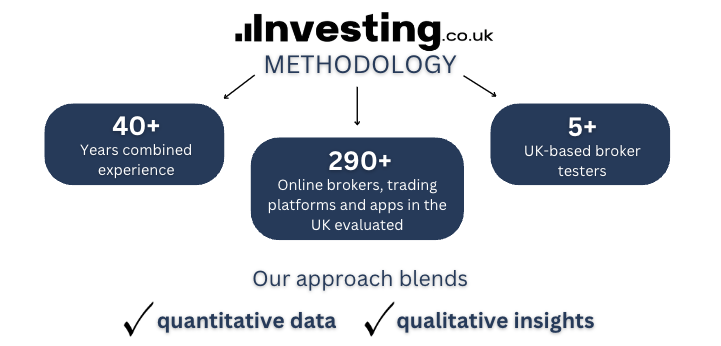
To find the top PAMM brokers, we carried out hands-on testing of each platform’s PAMM tools.
We assessed transparency, execution quality, and how easily investors could track performance in real time. Our team also reviewed asset range, from forex and indices to crypto and commodities, as well as cost structures including spreads and commissions.
We then ranked brokers by their overall ratings for a definitive list that takes into account their entire offering.
How To Pick A PAMM Broker
- Infrastructure and technology determine how smoothly and transparently your investments are managed. Brokers using trusted platforms like MT4 and MT5 benefit from proven, secure systems that automatically allocate profits and losses, thereby reducing errors and delays. Real-time performance reporting with verified trade histories enables you to monitor your investment’s progress accurately, helping you avoid misleading or manipulated data. A fair, automated allocation system ensures that returns are distributed precisely based on your share, which is crucial in fast-moving markets where manual calculations could lead to delays or discrepancies.
- Strategy choice and transparency are crucial because your returns depend entirely on the trader’s skill and strategy. Access to detailed, verified trading histories—including drawdowns, win-loss ratios, and equity curves—allows you to assess how consistently a manager performs and the level of risk they take. Being able to filter managers by strategy type, risk level, or investment duration helps you align your portfolio with your risk tolerance and goals. Without this transparency, you’re essentially investing blind, increasing the chance of unexpected losses or mismatched risk profiles.
- Fees and costs directly impact your net returns. Performance fees, typically ranging from 20% to 40%, mean the manager only earns when they generate profits. Still, other expenses—like management, withdrawal, or inactivity charges—can quietly eat into your gains over time. A fee structure based on a high-water mark ensures you only pay performance fees on new profits, not on recovered losses, protecting you from being charged repeatedly for the same gains. Knowing these details helps you avoid unexpected costs that reduce the effectiveness of your investment.
- Minimum deposit and investment flexibility determine how easily you can enter and exit PAMM accounts without being locked in. Some brokers require high minimum deposits, which might limit access for smaller investors. The ability to withdraw or reallocate funds quickly is crucial, especially in volatile markets where you may want to reduce exposure or switch managers. Watch out for penalties or lock-in periods that restrict your access to capital, as these can reduce your control and increase risk during market downturns.
- Risk management tools empower you to protect your investment by setting limits on potential losses, like maximum drawdown thresholds or auto-withdrawal triggers that automatically secure profits or cut losses. Without these controls, you rely entirely on the manager’s risk appetite, which might not align with yours. Additionally, the ability to diversify across multiple PAMM managers spreads risk, reducing the impact of any single trader’s poor performance and improving overall portfolio stability—an essential feature for managing volatility in forex markets.
- Platform usability and support make it easier to track your investments, understand performance metrics, and make informed decisions without confusion. Mobile apps and desktop dashboards offer flexibility, allowing you to monitor your PAMM accounts anytime, anywhere—essential in fast-moving markets. Responsive customer support, especially with PAMM-specific expertise, ensures you can quickly resolve issues or get guidance, reducing stress and protecting your investment from avoidable errors or delays.
- Regulation and licensing ensure that a PAMM broker operates under strict financial standards and oversight, which protects you from fraud, mismanagement, or misuse of funds. In the UK, FCA-regulated brokers must hold client funds in segregated accounts, meaning your money is kept separate from the broker’s operating capital and can’t be used to cover their debts. This structure reduces the risk of losing your investment if the broker becomes insolvent. Additionally, schemes like the Financial Services Compensation Scheme (FSCS) can reimburse up to £85,000 if the broker fails, offering an added layer of security that unregulated offshore brokers can’t match.
When I invest in a PAMM account, I’m handing control to an expert trader while still staying involved enough to know when to adjust or step away.For me, it’s all about finding the right balance between trust, oversight, and timing to unlock real growth.

What Is A PAMM Account?
A PAMM account is a type of investment system in which your funds are pooled with those of others and managed by a professional trader. Each investor owns a proportional share of the account, and profits or losses are distributed accordingly.
Unlike copy trading, PAMM accounts allow the manager to execute trades in bulk, improving efficiency and risk management. It’s a hands-off way to access financial markets, but performance depends entirely on the manager’s skill, making due diligence essential.
The PAMM trading system is primarily used in forex, but some brokers also offer PAMM accounts for cryptocurrencies, including Bitcoin and Litecoin.
How Do PAMM Accounts Work?
Each investor decides how much to allocate (often there are minimum requirements), and the PAMM software calculates the investor’s share as a percentage of the total fund.
The manager places trades from the master account, and the results—whether profit or loss—are automatically distributed to each investor based on their percentage share.
What sets PAMM apart from simple copy trading is the structural design: all trades are executed centrally, not duplicated across individual accounts. This reduces execution lag, slippage, and potential pricing discrepancies, especially in volatile markets.
Investors don’t interact directly with the market—they rely entirely on the manager’s decisions, which makes trust and transparency paramount.
Managers are typically incentivised through performance-based fees, meaning they only earn a percentage of profits if they generate returns.
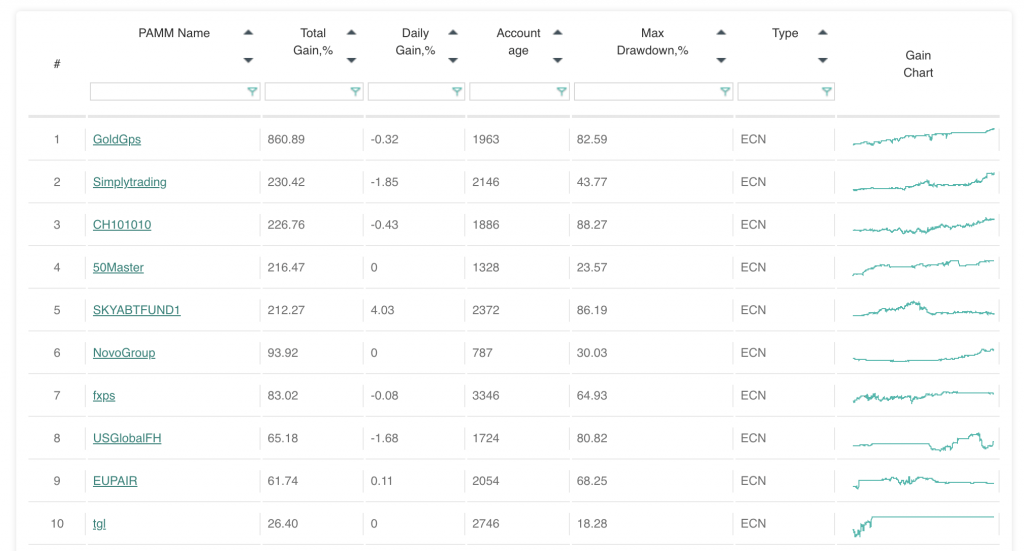
Many brokers offer detailed performance analytics, including drawdown history and trade frequency, allowing investors to assess risk before allocating funds.
However, PAMM systems don’t provide stop-loss control or trade approval to investors—making manager selection, fee awareness, and ongoing monitoring crucial components of responsible participation.
Pros Of PAMM Accounts
- Professional management: PAMM accounts are managed by experienced traders who often use algorithmic strategies, risk-adjusted position sizing, and technical or fundamental analysis to identify high-probability trade setups. Investors benefit from this expertise without needing to understand chart patterns, leverage, or market timing. The manager’s capital is typically co-invested, creating alignment and reducing the likelihood of reckless trading behaviour.
- Performance-based incentives: Unlike fixed management fees, PAMM structures usually include a high-water mark or profit-sharing model—e.g., the manager earns a 20% fee only on new net profits above the previous peak. This incentivises consistent performance while protecting investors from being charged during losing periods. It also discourages excessive risk-taking, as the manager must recover any losses before earning fees again.
- Efficient trade execution: Instead of duplicating trades across multiple investor accounts (as with traditional copy trading), PAMM systems execute all trades from a single master account and dynamically allocate profits and losses. This centralised execution reduces slippage, maintains accurate order fills during volatile market conditions, and avoids the liquidity fragmentation that can occur when hundreds of accounts submit identical trades at once.
Cons Of PAMM Accounts
- No control over trades: Once you allocate funds to a PAMM account, you surrender all control over trade entries, exits, and risk exposure. Unlike copy trading on platforms like eToro, for example, where you can sometimes modify or close trades manually, PAMM accounts operate on a pooled structure—meaning you’re entirely dependent on the manager’s strategy and timing, even during high-risk market conditions or drawdowns.
- Manager risk & limited transparency: While past performance data is often available, PAMM systems don’t always reveal the manager’s complete strategy or risk profile. Some may use high-leverage, grid systems, or martingale approaches that appear profitable in the short term but carry hidden risks. Since you’re not privy to the trader’s decision-making or live strategy changes, poor risk management can result in significant losses.
- Performance fees, regardless of volatility: Although performance fees are typically aligned with returns, they are often calculated based on profitable periods and may not account for overall account volatility. For example, a manager might earn a fee after a good month, even if it followed a significant loss. Without a robust high-water mark or drawdown-based fee structure, you may pay for gains that recover prior losses, thereby reducing your net performance over time.
One thing I’ve realised about PAMM investing is that it’s not just about picking the highest returns—it’s about understanding the trader’s strategy and risk style.A great manager who matches your comfort level can make all the difference between steady growth and unexpected losses.
Bottom Line
PAMM accounts provide you with a hands-off way to participate in forex and other markets by letting experienced traders manage your funds.
However, selecting the right broker is crucial to ensure strong regulation, transparent performance tracking, and fair fee structures.
Choosing wisely can help you navigate the complexities of managed accounts and maximise your investment potential.
See our list of the best brokers with PAMM accounts to get started.