Best Brokers With The Fewest Losing Traders



Regulated brokers are required to publish figures on the percentage of clients that lose money on their platforms. We’ve collated these so you can see the brokers with the fewest losing traders, otherwise known as the brokers with the most winning traders.
Top UK Brokers With The Most Winning Traders
-


Founded in 2005, FXOpen is a well-regulated broker that has drawn over one million traders. Tailored for active trading, it offers a diverse range of over 700 markets. The platform facilitates high-frequency trading, scalping, and various algorithmic strategies through the use of expert advisors (EAs).
Winning Traders: 40%
Instruments Regulator Platforms CFDs, Forex, Stocks, Indices, Commodities, Crypto, ETFs FCA, CySEC, FC TickTrader, MT4, MT5, TradingView Min. Deposit Min. Trade Leverage $100 0.01 Lots 1:30 (EU, UK), 1:1000 (Global) -
eToro is a leading multi-asset platform providing trading services across numerous CFDs, stocks, and cryptocurrencies. Since its 2007 inception, it has attracted millions of traders worldwide. It operates with authorisation from top regulators such as the FCA and CySEC. Its social trading feature is especially well-regarded. Crypto investments are high-risk and possibly unsuitable for retail investors. There's a potential to lose all invested capital. Familiarise yourself with the risks. 61% of retail CFD accounts incur losses.
Winning Traders: 39%
Instruments Regulator Platforms CFDs, Forex, Stocks, Indices, ETFs, Smart Portfolios, Commodities, Futures, Crypto, NFTs FCA, CySEC, MiCA, MFSA, FSRA, ASIC, FSAS, MAS, GFSC eToro Web, CopyTrader, TradingCentral Min. Deposit Min. Trade Leverage $50 $10 1:30 -
Interactive Brokers (IBKR) stands as a leading brokerage, offering access to 170+ markets in 40 nations alongside extensive investment services. With 40+ years in finance, this Nasdaq-listed entity complies with regulations from the SEC, FCA, CIRO, and SFC, ensuring global trustworthiness in trading.
Winning Traders: 38%
Instruments Regulator Platforms Stocks, Options, Futures, Forex, Funds, Bonds, ETFs, Mutual Funds, Cryptocurrencies, CFDs SEC, FINRA, CFTC, NFA, CIRO, FCA, CBI, ASIC, SFC, SEBI, JFSA, MAS Trader Workstation (TWS), IBKR Desktop, GlobalTrader, Mobile, Client Portal, AlgoTrader, OmniTrader, TradingView, eSignal, TradingCentral, ProRealTime, Quantower Min. Deposit Min. Trade Leverage $0 $1 1:30 -
Spreadex, regulated by the FCA, provides spread betting across 10,000+ CFD instruments, including 60 forex pairs. Traders have the option to engage in short-term positions on sporting events as well. With a history exceeding 20 years, the company has earned numerous accolades.
Winning Traders: 38%
Instruments Regulator Platforms Forex, CFDs, Indices, Commodities, Stocks, Crypto, Bonds, Interest Rates, ETFs, Options, Spread Betting FCA Spreadex Platform, TradingView, AutoChartist Min. Deposit Min. Trade Leverage £0 (but £5 minimum for standard payment methods) £0.01 1:30 -
Founded in 1989, CMC Markets is a reputable broker publicly listed on the London Stock Exchange. It holds authorisation from top-tier regulators such as the FCA, ASIC, and CIRO. The brokerage, which has received multiple awards, boasts a global membership exceeding one million traders.
Winning Traders: 31%
Instruments Regulator Platforms CFDs, Forex, Stocks, Indices, Commodities, ETFs, Treasuries, Custom Indices, Spread Betting, Certificates and Warrants (Germany and Austria) FCA, ASIC, MAS, CIRO, BaFin, FMA, DFSA Web, MT4, MT5, TradingView Min. Deposit Min. Trade Leverage $0 0.01 Lots 1:30 (Retail), 1:500 (Pro) -
HYCM, authorised by four global entities including the FCA, is an online broker. It provides short-term CFD trading on forex, shares, commodities, indices, ETFs, and Bitcoin. The broker supports MT4, MT5, and Trading Central analysis.
Winning Traders: 30%
Instruments Regulator Platforms CFDs, Forex, Stocks, Indices, Commodities, ETFs FCA, DFSA HYCM Trader, MT4, MT5, TradingCentral Min. Deposit Min. Trade Leverage $20 0.01 Lots 1:301:500 -
Established in 1974, IG is a unit of IG Group Holdings Plc, listed on the LSE as IGG. It provides access to over 17,000 markets through intuitive platforms and apps. For half a century, IG has remained an industry leader, excelling in all vital aspects for traders.
Winning Traders: 30%
Instruments Regulator Platforms CFDs (not in US), Forex, Stocks, Indices, Commodities, ETFs, Futures, Options, Crypto, Spread Betting (UK only) CFTC, NFA, FCA, BaFin, ASIC, FINMA, MAS, JFSA, FMA, DFSA, BMA, CONSOB Web, L2 Dealer, MT4, TradingView, AutoChartist, TradingCentral, ProRealTime Min. Deposit Min. Trade Leverage $0 0.01 Lots 1:30 (Retail), 1:222 (Pro)
 FXOpen
 eToro
eToro Interactive Brokers
 Spreadex
 CMC Markets
 HYCM
HYCM IG
IGSafety Comparison
Compare how safe the Best Brokers With The Fewest Losing Traders are and what features they offer to protect traders.
| Broker | Trust Rating | FCA Regulated | Negative Balance Protection | Guaranteed Stop Loss | Segregated Accounts |
|---|---|---|---|---|---|
| FXOpen | ✔ | ✔ | ✘ | ✔ | |
| eToro | ✔ | ✔ | ✘ | ✔ | |
| Interactive Brokers | ✔ | ✔ | ✘ | ✔ | |
| Spreadex | ✔ | ✔ | ✔ | ✔ | |
| CMC Markets | ✔ | ✔ | ✔ | ✔ | |
| HYCM | ✔ | ✔ | ✘ | ✘ | |
| IG | ✔ | ✔ | ✔ | ✔ |
Payments Comparison
Compare which popular payment methods the Best Brokers With The Fewest Losing Traders support and whether they have trading accounts denominated in British Pounds (GBP).
| Broker | GBP Account | Debit Card | Credit Card | Neteller | Skrill | Apple Pay |
|---|---|---|---|---|---|---|
| FXOpen | ✔ | ✔ | ✔ | ✔ | ✔ | ✘ |
| eToro | ✔ | ✔ | ✘ | ✔ | ✔ | ✘ |
| Interactive Brokers | ✔ | ✘ | ✘ | ✘ | ✘ | ✘ |
| Spreadex | ✔ | ✔ | ✔ | ✘ | ✘ | ✘ |
| CMC Markets | ✔ | ✔ | ✔ | ✘ | ✘ | ✘ |
| HYCM | ✔ | ✘ | ✘ | ✔ | ✔ | ✘ |
| IG | ✔ | ✔ | ✔ | ✘ | ✘ | ✘ |
Mobile Trading Comparison
How good are the Best Brokers With The Fewest Losing Traders at mobile trading using apps or other mobile interfaces.
| Broker | Mobile Apps | iOS Rating | Android Rating | Smart Watch App |
|---|---|---|---|---|
| FXOpen | iOS & Android | ✘ | ||
| eToro | iOS & Android | ✘ | ||
| Interactive Brokers | iOS & Android | ✔ | ||
| Spreadex | iOS & Android | ✘ | ||
| CMC Markets | iOS & Android | ✘ | ||
| HYCM | iOS & Android | ✘ | ||
| IG | iOS & Android | ✔ |
Beginners Comparison
Are the Best Brokers With The Fewest Losing Traders good for beginner traders, that might want an affordable setup to get started, along with good support and educational resources?
| Broker | Demo Account | Minimum Deposit | Minimum Trade | Support Rating | Education Rating |
|---|---|---|---|---|---|
| FXOpen | ✔ | $100 | 0.01 Lots | ||
| eToro | ✔ | $50 | $10 | ||
| Interactive Brokers | ✔ | $0 | $1 | ||
| Spreadex | ✘ | £0 (but £5 minimum for standard payment methods) | £0.01 | ||
| CMC Markets | ✔ | $0 | 0.01 Lots | ||
| HYCM | ✔ | $20 | 0.01 Lots | ||
| IG | ✔ | $0 | 0.01 Lots |
Advanced Trading Comparison
Do the Best Brokers With The Fewest Losing Traders offer features that allow for more advanced trading strategies?
| Broker | Automated Trading | Pro Account | Leverage | VPS | AI | Low Latency | Extended Hours |
|---|---|---|---|---|---|---|---|
| FXOpen | Expert Advisors (EAs) on MetaTrader | ✘ | 1:30 (EU, UK), 1:1000 (Global) | ✔ | ✘ | ✔ | ✘ |
| eToro | Automate your trades via CopyTrader - follow profitable traders. Open and close trades automatically when they do. | ✘ | 1:30 | ✘ | ✔ | ✘ | ✔ |
| Interactive Brokers | TWS API | ✘ | 1:30 | ✘ | ✔ | ✔ | ✔ |
| Spreadex | ✘ | ✔ | 1:30 | ✘ | ✘ | ✔ | ✔ |
| CMC Markets | Expert Advisors (EAs) on MetaTrader | ✔ | 1:30 (Retail), 1:500 (Pro) | ✔ | ✘ | ✔ | ✔ |
| HYCM | Expert Advisors (EAs) on MetaTrader | ✔ | 1:301:500 | ✘ | ✘ | ✔ | ✘ |
| IG | Expert Advisors (EAs) on MetaTrader, build your own on ProRealTime | ✔ | 1:30 (Retail), 1:222 (Pro) | ✔ | ✔ | ✔ | ✔ |
Detailed Rating Comparison
Use this heatmap to compare our detailed ratings for all of the Best Brokers With The Fewest Losing Traders.
| Broker | Trust | Platforms | Mobile | Assets | Fees | Accounts | Support | Research | Education |
|---|---|---|---|---|---|---|---|---|---|
| FXOpen | |||||||||
| eToro | |||||||||
| Interactive Brokers | |||||||||
| Spreadex | |||||||||
| CMC Markets | |||||||||
| HYCM | |||||||||
| IG |
Our Take On FXOpen
"FXOpen is perfect for high-volume traders, providing swift execution via its ECN system, spreads starting at 0 pips, and reduced commissions as low as $1.50 per lot."Tobias Robinson
Reviewer
Pros
- FXOpen significantly cut FX spreads by over 40% in 2022. In 2023, they launched commission-free index trading. These changes make trading more economical for traders.
- FXOpen integrated TradingView in 2022 and enhanced its TickTrader platform in 2024. This upgrade delivers Level 2 pricing, over 1,200 trading instruments, and sophisticated order options. The platform appeals to both seasoned and high-frequency traders.
- In 2024, FXOpen simplified its account options. Traders now benefit from ECN accounts with raw spreads starting at 0.0 pips. The platform offers rapid execution and reduced commissions for those with high trading volumes, enhancing user experience.
Cons
- Though FXOpen remains a trusted broker with authorizations from the FCA and CySEC, it lost its ASIC license in 2024 due to 'serious concerns.' Consequently, it no longer accepts traders from Australia.
- FXOpen's educational resources are quite limited, with a scarcity of courses and webinars commonly available at brokers such as IG. This deficiency may deter novice traders looking to enhance their understanding.
- Even with an expanded asset portfolio, FXOpen provides a more limited selection of global stocks, commodities, and cryptocurrencies compared to the leading firm BlackBull. This results in fewer diverse trading opportunities for traders.
Our Take On eToro
"eToro's social trading platform excels with its outstanding user experience and lively community chat, aiding beginners in spotting opportunities. It offers competitive fees on numerous CFDs and real stocks, alongside exceptional rewards for seasoned strategists."Tobias Robinson
Reviewer
Pros
- Leading traders participating in the broker's Popular Investor Programme can earn yearly compensation of up to 1.5% of the copied assets.
- The trading app provides a top-tier social environment featuring an engaging feed and community chat, which we enjoy using.
- In 2025, eToro altered its fee structure by separating crypto trading fees from the spread. A distinct commission is now listed separately, providing traders with increased transparency while maintaining consistent overall costs.
Cons
- The absence of extra charting platforms such as MT4 may deter experienced traders who rely on external software.
- There are no assured stop-loss orders, which could be a valuable risk management tool for novice traders.
- The only significant contact option, besides the in-platform live chat, is limited.
Our Take On Interactive Brokers
"Interactive Brokers ranks highly for seasoned traders due to its robust charting platforms, live data, and bespoke layouts via the new IBKR Desktop app. Its competitive pricing and sophisticated order choices appeal to traders, and its wide equity options are industry-leading."Tobias Robinson
Reviewer
Pros
- IBKR is a highly respected brokerage, regulated by top-tier authorities, ensuring the integrity and security of your trading account.
- The new IBKR Desktop platform combines the top features of TWS with customised tools such as Option Lattice and MultiSort Screeners, providing an impressive trading experience for traders of all skill levels.
- IBKR offers an economical environment for traders, featuring low commissions, narrow spreads, and a clear fee structure.
Cons
- TWS has a steep learning curve, making it difficult for newcomers to navigate and grasp its features.
- Support can be sluggish and frustrating. Tests reveal that you may face challenges reaching customer service quickly, which could result in delays in issue resolution.
- You are limited to a single active session per account, meaning you cannot use both your desktop programme and mobile app at the same time. This restriction can occasionally lead to a frustrating experience for traders.
Our Take On Spreadex
"Spreadex attracts UK traders keen on spread betting in financial markets and traditional sports wagers. It offers low fees for short trades, and spread bet profits are tax-free. With a robust charting platform and no minimum deposit, it's easy to begin."Tobias Robinson
Reviewer
Pros
- Spreadex has integrated Autochartist-powered trading signals into its desktop platform. This offers real-time, pattern-based insights aimed at assisting active traders in spotting potential opportunities.
- During live trials near London, Spreadex exhibited 120–200ms round-trip latency across over 50 FTSE and EUR/USD trades. There were no requotes, and slippage remained largely controlled under normal market conditions.
- Over 10,000 instruments and superior access to AIM small-caps are available, including exclusive offerings not found with larger brokers. This provides UK-centric traders with enhanced opportunities in niche small-cap configurations.
Cons
- Spreadex lacks MT4, MT5, cTrader, API, VPS, and algorithmic trading support, making it ideal for active traders rather than those using automated or bespoke trading systems.
- Spreadex requires real funds initially, offering no demo accounts. Few spread betting brokers neglect to accommodate new traders in this manner.
- Execution is satisfactory, though not top-tier. Tests showed 0.2–0.4 pip slippage in stable liquid markets, but news-induced volatility increased some fills to around 1 pip. Thinner AIM stocks often experienced 2–4 point slippage.
Our Take On CMC Markets
"Equipped with advanced charts and a broad array of tradable CFDs, including an unmatched selection of currencies and bespoke indices, CMC Markets offers an excellent online platform for traders at any level."Tobias Robinson
Reviewer
Pros
- CMC provides competitive pricing with narrow spreads and low trading fees, except for stock CFDs. The Alpha and Price+ programmes offer additional benefits for active traders, including discounts on spreads of up to 40%.
- The brokerage excels with an extensive array of valuable resources, such as pattern recognition scanners, webinars, tutorials, news feeds, and research from reputable sources like Morningstar.
- CMC Markets has introduced an AI News feature. This leverages AI to highlight and summarise market stories instead of executing trades, suggesting the future direction of broker research tools.
Cons
- The CMC Markets app provides a comprehensive trading package; however, its design and user experience lag behind market leaders such as eToro.
- A £15 monthly inactivity fee applies after a year of no activity, possibly discouraging casual investors.
- Although there have been improvements, the online platform still needs further refinement to match the user-friendly trading experience offered by competitors such as IG.
Our Take On HYCM
"Traders seeking a multi-asset broker with robust platform support, additional analysis tools, and stringent regulation should consider HYCM. The competitive raw-spread accounts benefit scalpers and high-volume traders."Tobias Robinson
Reviewer
Pros
- While most retail CFD brokers offer gold, oil, and silver, HYCM goes further by providing agricultural soft commodities. This is available from a standard account without requiring a higher minimum deposit or professional status. For those seeking true commodity diversification beyond metals and energy, such access is unusually available at this level.
- HYCM, established in 1977, has endured events like Black Wednesday, the 2008 financial crisis, the SNB shock, and various FCA regulatory changes that saw many rivals restructure or exit. While many brokers recently obtained FCA regulation, HYCM's longstanding compliance spans a full generation of retail traders. This signifies a uniquely established track record.
- Instead of a fixed leverage cap, HYCM's model automatically decreases leverage as position volume grows, safeguarding traders from excessive exposure on large trades without manual margin adjustments. Typical retail brokers set a static leverage limit, leaving risk control entirely to traders. The dynamic model provides a structural risk safeguard, especially beneficial for novice traders gradually expanding positions.
Cons
- HYCM still uses the same MT4, MT5, and proprietary mobile app infrastructure from five years ago. There's no TradingView, cTrader, social trading, copy trading, or PAMM available. Despite having nearly 50 years of history and FCA regulation, the lack of platform development shows little focus on technology investment. This is crucial as rivals integrate TradingView and expand social trading to appeal to new retail traders.
- Brokers such as eToro, Pepperstone, and IC Markets have created client acquisition channels centred on social and copy trading. HYCM lacks this approach. This leaves new traders wishing to invest in proven strategies and experienced traders aiming to profit from managing external capital without a platform. Consequently, HYCM fails to serve this segment of retail traders.
- The limitation appears solely in HYCM's terms. Investors opening a Fixed or Classic account, creating a short-term strategy, and executing rapid trades risk having profits seized and accounts suspended without notice. The Raw account allows more precise trading, but the threshold between allowed and forbidden trading frequency is not clearly defined on hycm.com.
Our Take On IG
"IG offers a complete package: an easy-to-use web platform, top-tier beginner education, enhanced charting via TradingView, up-to-date data, and strong trade execution for seasoned traders."Tobias Robinson
Reviewer
Pros
- The ProRealTime advanced charting platform remains free, provided traders meet modest monthly activity requirements.
- IG provides a wide range of professional and engaging educational materials, such as webinars, articles, and analyses, tailored for traders.
- IG excels with its diverse instruments, offering stocks, forex, indices, commodities, and cryptocurrencies. Additionally, it provides US-listed futures, options, and an AI Index, ensuring varied diversification opportunities.
Cons
- Beginners may find IG's fees complicated, as they vary depending on the trades or services. This could cause confusion and unexpected costs.
- IG imposes a monthly inactivity fee of $12 to $18 after two years, discouraging occasional investors.
- IG has ended its swap-free account, diminishing its attractiveness to Islamic traders.
How Investing.co.uk Chose The Brokers With The Fewest Losing Traders
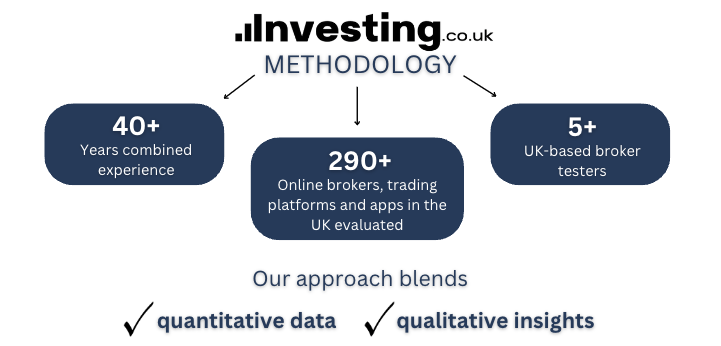
We reviewed the regulator-required statistics on client trading outcomes that brokers must publish under ESMA and other oversight rules.
We recorded these figures and then ranked brokers based on the percentage of traders reporting losses, highlighting those with the lowest proportion.
What To Look For In A Broker
There are many reasons a broker’s clientele might have a high win rate, but the losing percentage isn’t necessarily reflective of the level of service offered by UK trading firms. While a useful metric, for us the best brokers with the fewest losing traders also excel in the following areas:
Trust
As with any broker we review, we’re looking for reliable and trustworthy firms as a top priority, and we won’t recommend any that fail to meet our strict requirements on trust.
Foremost among these is regulation, as we favour firms that are overseen by the UK’s Financial Conduct Authority (FCA) or another respected international regulator.
This is especially important when it comes to discerning the number of losing traders because the FCA and European regulators require brokers to disclose this information. So, if you find the percentage of losing traders prominently displayed on a broker’s website, it is likely to be overseen by one of these regulators.
- FXCM is a reputable firm with licenses from numerous respected bodies around the world, including the FCA, the Cyprus Securities and Exchange Commission (CySEC) and Australian Securities and Investments Commission (ASIC).
Fees
You’ll have a better chance of a consistent win rate if you choose a broker with low fees as each trade you make has a lower bar to profitability.
For us, the most important fee for traders is the spread – the difference between an instrument’s buy and sell price – because this represents the first hurdle you need to cross before you make a profit.
Let’s say you open a trade on EUR/USD with a broker that charges a 1-pip spread. The currency will need to move at least 1.1 pips in your direction before you start making a profit.
But many brokers charge a much tighter spread on a major pair like EUR/USD, and with a 0.1-pip spread, your threshold to profit is 90% lower, which naturally translated to more winning trades.
You also need to consider any commission fees, which are often necessary to unlock the accounts with the tightest spreads, as well as non-trading fees such as deposit/withdrawal charges.
- Spreadex is a low-cost CFD and spread betting broker that charges no commission on spread betting and many CFDs, and no hidden fees. An added bonus for UK traders is that profits from spread betting are not subject to tax.
Leverage
Leverage allows you to increase the size of your position with borrowed funds, and when used wisely this can increase your gains from winning trades and will have a positive effect on your overall profitability.
Note that your losses will also be magnified in leveraged trades, so you need to use this tool with care.
You need to trade very carefully when you use leverage, since a poorly planned trade or an unexpected turn of events can leave you very far out of pocket.I suggest using leverage conservatively, and employing strong risk management techniques when you do. Stop loss orders, for example, will prevent sudden, sharp market movements from wiping out your trading capital.
- easyMarkets is a reliable option for UK investors looking for high leverage, with various accounts offering leverage from 1:200 up to a stratospheric 1:2000. This is far more than most traders will need, but it will appeal to seasoned professionals with a high risk tolerance.
Copy Trading
You can sometimes significantly boost your win rate by using copy or social trading to benefit from the expertise of a professional trader or investor.
We find this feature especially useful for new traders and those with little time to analyse markets and research trades.
The best copy trading brokers provide detailed information on all aspects of the master trader’s style, track record and portfolio, allowing you to make an informed decision before you invest.

Traders can easily find and compare successful master traders on eToro’s copy trading interface
- eToro is a copy trading pioneer and still provides one of the best experiences for traders who use this feature, with an intuitive and easy-to-use platform that allows traders to easily find and compare master traders who suit their needs.
Platforms & Apps
You should choose a broker with powerful charting platform options and apps as these crucial tools help you plot and execute your trades effectively, and naturally impact your ratio of winning and losing trades.
The top brokers offer stable trading platforms and apps. Look for customisation, order types, intuitive charts, automated trading, and integrated news streams. Long-time favourites include MetaTrader 4, MetaTrader 5, and cTrader, and the newer TradingView has quickly become a leading option.
- FxOpen remains a top option for its platform choices, with traders able to use MT4, MT5, TradingView or the proprietary TickTrader platform.
A Legal Requirement
In line with transparency requirements introduced by the European Securities and Markets Authority (ESMA) in 2018, brokers must disclose the percentage of traders that win/lose money on their platforms. This accompanied a ban on the sale of binary options and restrictions on the marketing of CFDs.
Prior to this, some brands used misleading advertisements and messaging that did not adequately convey the risks of online trading.
Brokers must update these figures every three months to comply with the rules.
Where To Find Figures On Losing Traders
The percentage of clients that lose money must be displayed clearly on a broker’s website, usually at the top or bottom of each webpage.
Pepperstone, for instance, publishes this information in the header of every page on its UK site.

Brokers that do not clearly display the winning/losing percentage may not be regulated, and if they are, they could be in breach of the requirements. Either way, this is a red flag.
What The Figures Mean (And Don’t Mean)
Unsurprisingly, the brokers with the fewest losing traders are likely to attract new users. However, a word of warning…
The percentage of winning/losing traders can change significantly. Volatile assets like cryptocurrency and unpredictable events can cause a spike or drop in the figures. With this in mind, compare similar brands over the same period.
Copy trading has also had an impact on published figures. Losing traders can now opt to follow the strategies and positions of experienced traders, potentially boosting their returns, and in turn, the percentage of profitable clients overall.
Ultimately, brokers with the fewest losing traders are able to stay profitable despite more users making money on their platforms and apps. How they can do this will vary, from lower overheads to higher fees in other areas.
Bottom Line
It is a legal requirement for UK-regulated brokers to publish and update figures on the number of losing traders on their platform. This is good news for traders, who can now see which brokers have the most winning traders. It is also a win for online brokers, who have another marketing tool to attract new retail investors.
FAQ
Do Brokers Have To Publish Losing Trader Figures?
In line with ESMA’s 2018 transparency rules, authorised brokers must publish details of the number of winning/losing customers. This information is publicly available and can normally be viewed in the header or footer of a brand’s website.
How Do Brokers With The Fewest Losing Clients Make Money?
Brokers may charge higher fees in other areas, from wider spreads and larger commissions to withdrawal fees and charges for extra tools and market data. The losing trading percentage isn’t necessarily reflective of the overall service provided by brokers.