

Funding a trading account with a debit card looks simple on the surface. You pull out your card, type in the details, and the money shows up in your account. But there’s a catch – not every broker handles debit card payments the same way.
That’s why we’ve tested and ranked the best brokers that accept debit card deposits in the UK.
Best Debit Card Brokers
Investing involves risk. Asset prices can move rapidly and you may lose some or all money invested. Never invest more than you can afford to lose.Advertising disclosure
Our picks at a glance
- 1 Spreadex Top score: Mobile 4.5 Info Visit Spreadex
- 2 IG Top score: Fees 4.5 Info Visit IG
- 3 Trade Nation Top score: Support 4.4 Info Visit Trade Nation
- 4 eToro Top score: Trust 4.0 Info Visit eToro
- 5 Plus500 Top score: Trust 4.1 Info Visit Plus500
- 6 Vantage Top score: Trust 4.3 Info Visit Vantage
- 7 Axi Top score: Mobile 3.7 Info Visit Axi
-
Our top pick
Spreadex, regulated by the FCA, provides spread betting across 10,000+ CFD instruments, including 60 forex pairs. Traders have the option to engage in short-term positions on sporting events as well. With a history exceeding 20 years, the company has earned numerous accolades.
- Instruments
- Forex, CFDs, Indices, Commodities, Stocks, Bonds, Interest Rates, ETFs, Options, Spread Betting
- Regulator
- FCA
- Platforms
- Spreadex Platform, TradingView, AutoChartist
- Min. Deposit
- £0 (but £5 minimum for standard payment methods)
- Min. Trade
- £0.01
- Leverage
- 1:30 (Retail), 1:200 (Pro)
64% of retail spread betting and CFD accounts lose money with this provider.
-
Established in 1974, IG is a unit of IG Group Holdings Plc, listed on the LSE as IGG. It provides access to over 17,000 markets through intuitive platforms and apps. For half a century, IG has remained an industry leader, excelling in all vital aspects for traders.
- Instruments
- CFDs (not in US), Forex, Stocks, Indices, Commodities, ETFs, Futures, Options, Crypto, Spread Betting (UK only)
- Regulator
- CFTC, NFA, FCA, BaFin, ASIC, FINMA, MAS, JFSA, FMA, DFSA, BMA, CONSOB
- Platforms
- Web, L2 Dealer, MT4, TradingView, AutoChartist, TradingCentral, ProRealTime
- Min. Deposit
- $0
- Min. Trade
- 0.01 Lots
- Leverage
- 1:30 (Retail), 1:222 (Pro)
Spread bets and CFDs are complex instruments and come with a high risk of losing money rapidly due to leverage. 70% of retail investor accounts lose money when trading spread bets and CFDs with this provider. You should consider whether you understand how spread bets and CFDs work, and whether you can afford to take the high risk of losing your money.
-
Trade Nation is a leading FX and CFD broker regulated in the UK and Australia, among other places. The company provides competitively priced fixed and variable spreads on over 1,000 assets. Traders benefit from advanced platforms and comprehensive training materials. Additionally, the Signal Centre offers valuable trade ideas.
- Instruments
- CFDs, Forex, Indices, Shares, Commodities, Futures, Bonds, Spread Betting
- Regulator
- FCA, ASIC, CMVM, FSCA, SCB, FSA
- Platforms
- TN Trader, MT4, TradingView
- Min. Deposit
- $0
- Min. Trade
- 0.1 Lots
- Leverage
- 1:30 (Retail), 1:200 (Pro)
73.8% of retail investor accounts lose money when trading CFDs with this provider.
-
eToro is a leading multi-asset platform offering CFDs, shares and cryptoassets. Founded in 2007, it serves millions of active traders worldwide and is regulated by the FCA and CySEC. It is well known for its social trading platform.
Crypto investments are high risk and may not suit retail investors. You could lose all your capital. Understand the risks here. 55% of retail CFD accounts lose money.
- Instruments
- CFDs, Forex, Stocks, Indices, ETFs, Smart Portfolios, Commodities, Futures, Crypto, NFTs
- Regulator
- FCA, CySEC, MiCA, MFSA, FSRA, ASIC, FSAS, MAS, GFSC
- Platforms
- eToro Web, CopyTrader, TradingCentral
- Min. Deposit
- $50
- Min. Trade
- $10
- Leverage
- 1:30
55% of retail investor accounts lose money when trading with this provider. eToro is a multi-asset investment platform. The value of your investments may go up or down. Your capital is at risk. Don’t invest unless you’re prepared to lose all the money you invest. This is a high-risk investment and you should not expect to be protected if something goes wrong.
-
Founded in 2008 and based in Israel, Plus500 is a leading brokerage with over 25 million registered traders across more than 50 countries. It focuses on CFD trading, offering a user-friendly proprietary platform and mobile app. The company provides competitive spreads and does not impose commissions or charges for deposits or withdrawals. Plus500 stands out as a highly trusted broker, licensed by respected authorities such as the FCA, ASIC, and CySEC.
- Instruments
- CFDs on Forex, Stocks, Indices, Commodities, ETFs, Options
- Regulator
- FCA, CySEC, EFSA, ASIC, FMA, FSCA, MAS, ISA, FSA, DFSA, SCA, JFSA, SCB, CIRO, BAPPEBTI, OJK, BI
- Platforms
- WebTrader, App
- Min. Deposit
- $100
- Min. Trade
- Variable
- Leverage
81% of retail CFD accounts lose money.
-
Founded in 2009, Vantage provides access to over 1,000 short-term CFD products for millions of clients. Trade Forex CFDs from 0.0 pips via RAW accounts on TradingView, MT4 or MT5. FCA-regulated, Vantage segregates client funds and offers social trading tools for copy traders.
- Instruments
- CFDs, Forex, Stocks, Indices, Commodities, ETFs, Bonds, Spread betting
- Regulator
- FCA, ASIC, FSCA, VFSC, CIMA
- Platforms
- ProTrader, MT4, MT5, TradingView, TradingCentral, DupliTrade
- Min. Deposit
- $50
- Min. Trade
- 0.01 Lots
- Leverage
- 1:30
72.65% of accounts lose money when trading CFDs with this provider.
-
Founded in 2007, Axi is a forex and CFD broker operating under multiple regulations. Over the years, it has enhanced the trading experience by broadening its stock offerings, upgrading the Axi Academy, and launching a proprietary copy trading app.
- Instruments
- CFDs, Forex, Stocks, Indices, Commodities
- Regulator
- FCA, ASIC, FMA, DFSA, FSC
- Platforms
- Axi Copy Trading, MT4, AutoChartist
- Min. Deposit
- $0
- Min. Trade
- 0.01 Lots
- Leverage
- 1:30
72.4% of retail investor accounts lose money when trading CFDs with this provider
Compare
Safety Comparison
Compare how safe the Best Debit Card Brokers 2026 are and what features they offer to protect traders.
| Broker | Trust Rating | FCA Regulated | Negative Balance Protection | Guaranteed Stop Loss | Segregated Accounts |
|---|---|---|---|---|---|
 |
4.0 | ||||
 |
4.4 | ||||
 |
4.3 | ||||
 |
4.3 | ||||
 |
4.4 | ||||
 |
4.6 | ||||
 |
3.8 |
Payments Comparison
Compare which popular payment methods the Best Debit Card Brokers 2026 support and whether they have trading accounts denominated in British Pounds (GBP).
| Broker | GBP Account | Debit Card | Credit Card | Neteller | Skrill | Apple Pay |
|---|---|---|---|---|---|---|
|
||||||
|
||||||
|
||||||
|
||||||
|
||||||
|
||||||
|
Mobile Trading Comparison
How good are the Best Debit Card Brokers 2026 at mobile trading using apps or other mobile interfaces.
| Broker | Mobile Apps | iOS Rating | Android Rating | Smart Watch App |
|---|---|---|---|---|
|
iOS & Android | 4.5 | 4.5 | |
|
iOS & Android | 4.6 | 4.0 | |
|
iOS & Android | 4.5 | 4.5 | |
|
iOS & Android | 4.0 | 3.8 | |
|
iOS, Android & Windows | 4.1 | 4.3 | |
|
iOS & Android | 3.6 | 3.9 | |
|
iOS & Android | 3.6 | 4.2 |
Beginners Comparison
Are the Best Debit Card Brokers 2026 good for beginner traders, that might want an affordable setup to get started, along with good support and educational resources?
| Broker | Demo Account | Minimum Deposit | Minimum Trade | Support Rating | Education Rating |
|---|---|---|---|---|---|
|
£0 (but £5 minimum for standard payment methods) | £0.01 | 4.3 | 4.0 | |
|
$0 | 0.01 Lots | 4.5 | 4.8 | |
|
$0 | 0.1 Lots | 4.9 | 4.2 | |
|
$50 | $10 | 2.5 | 4.0 | |
|
$100 | Variable | 4.0 | 3.0 | |
|
$50 | 0.01 Lots | 3.8 | 4.0 | |
|
$0 | 0.01 Lots | 3.8 | 3.8 |
Advanced Trading Comparison
Do the Best Debit Card Brokers 2026 offer features that allow for more advanced trading strategies?
| Broker | Automated Trading | Pro Account | Leverage | VPS | AI | Low Latency | Extended Hours |
|---|---|---|---|---|---|---|---|
|
1:30 (Retail), 1:200 (Pro) | ||||||
|
Expert Advisors (EAs) on MetaTrader, build your own on ProRealTime | 1:30 (Retail), 1:222 (Pro) | |||||
|
Expert Advisors (EAs) on MetaTrader | 1:30 (Retail), 1:200 (Pro) | |||||
|
Automate your trades via CopyTrader - follow profitable traders. Open and close trades automatically when they do. | 1:30 | |||||
|
|||||||
|
Myfxbook AutoTrade, Expert Advisors (EAs) on MetaTrader | 1:30 | |||||
|
Expert Advisors (EAs) on MetaTrader, Myfxbook | 1:30 |
Detailed Rating Comparison
Use this heatmap to compare our detailed ratings for all of the Best Debit Card Brokers 2026.
| Broker | Trust | Platforms | Mobile | Assets | Fees | Accounts | Support | Research | Education |
|---|---|---|---|---|---|---|---|---|---|
|
4.0 | 4.3 | 4.5 | 4.5 | 4.0 | 3.8 | 4.3 | 4.3 | 4.0 |
|
4.4 | 4.8 | 4.3 | 4.5 | 5.0 | 4.0 | 4.5 | 4.9 | 4.8 |
|
4.3 | 3.9 | 4.5 | 3.7 | 4.3 | 4.2 | 4.9 | 3.9 | 4.2 |
|
4.3 | 2.8 | 3.9 | 3.8 | 3.4 | 4.1 | 2.5 | 4.3 | 4.0 |
|
4.4 | 3.3 | 4.2 | 3.5 | 4.0 | 4.1 | 4.0 | 2.0 | 3.0 |
|
4.6 | 4.3 | 3.8 | 4.4 | 4.4 | 4.3 | 3.8 | 4.0 | 4.0 |
|
3.8 | 3.7 | 3.9 | 3.0 | 3.8 | 3.5 | 3.8 | 3.5 | 3.8 |
Our Take On Spreadex
Spreadex will appeal to UK traders who are interested in both spread betting on financial markets and placing traditional bets on sports events. Fees are low on short trades and profits are generally tax-free on spread bets for individuals. There's also a powerful proprietary charting platform, plus £0 minimum deposit required to get started.
 Tobias Robinson Reviewer
Pros
- Spreadex has integrated Autochartist-powered trading signals into its desktop platform. This offers real-time, pattern-based insights aimed at assisting active traders in spotting potential opportunities.
- During live trials near London, Spreadex exhibited 120–200ms round-trip latency across over 50 FTSE and EUR/USD trades. There were no requotes, and slippage remained largely controlled under normal market conditions.
- Over 10,000 instruments and superior access to AIM small-caps are available, including exclusive offerings not found with larger brokers. This provides UK-centric traders with enhanced opportunities in niche small-cap configurations.
Cons
- Spreadex requires real funds initially, offering no demo accounts. Few spread betting brokers neglect to accommodate new traders in this manner.
- CFDs, financial spread bets, sports, and casino activities are combined in one account balance. For serious traders, this means non-trading losses can immediately decrease the margin for trading positions.
- Execution is satisfactory, though not top-tier. Tests showed 0.2–0.4 pip slippage in stable liquid markets, but news-induced volatility increased some fills to around 1 pip. Thinner AIM stocks often experienced 2–4 point slippage.
64% of retail spread betting and CFD accounts lose money with this provider.
Our Take On IG
IG offers a complete package: an easy-to-use web platform, top-tier beginner education, enhanced charting via TradingView, up-to-date data, and strong trade execution for seasoned traders.
Tobias Robinson Reviewer
Pros
- IG offers one of the widest instrument ranges, including Anthropic shares, forex, indices, commodities, cryptocurrencies, US-listed futures and options, and an AI Index, supporting diversification.
- IG plans to broaden its offering with prediction markets on politics, sport and entertainment in the UK, subject to a gambling licence, with further regions potentially to follow.
- IG obtained a crypto asset license from the FCA, allowing it to re-enter the UK market to provide buying, selling and storing opportunities on 150+ digital tokens with fees from 1.49%.
Cons
- Beginners may find IG's fees complicated, as they vary depending on the trades or services. This could cause confusion and unexpected costs.
- IG has ended its swap-free account, diminishing its attractiveness to Islamic traders.
- IG imposes a monthly inactivity fee of $12 to $18 after two years, discouraging occasional investors.
70% of retail investor accounts lose money when trading CFDs with this provider. You should consider whether you can afford to take the high risk of losing your money.
Our Take On Trade Nation
Trade Nation caters to discretionary traders aiming to speculate on major indices like the US 500 or liquid FX pairs, with the certainty of fixed spreads. Our tests revealed the TN Trader's fixed spreads to be advantageous, especially during economic announcements, thanks to its dependable charting and capped spreads.
Tobias Robinson Reviewer
Pros
- Trade Nation's 2026 alliance with Volt has streamlined payments for Australian traders, enabling instant deposits and withdrawals via PayID. Faster payout features are also anticipated for UK and EU clients.
- The broker expanded into Europe after receiving CMVM approval in Portugal, enhancing protections for European clients.
- During tests of the TN Trader account in standard market conditions, fixed spreads remained stable. Major forex pairs experienced prompt order fills, albeit with slight entry level drift as prices fluctuated between click and execution.
Cons
- Offshore SCB and FSA firms offer retail investors leverage up to 1:200 and 1:500. In contrast, regions like the UK, Europe, and Australia cap leverage at 1:30. Thus, an FSA client can access 16 times more exposure than a UK retail client on identical trades. However, this comes with reduced oversight and no compensation schemes.
- The FCA, CMVM, and ASIC clients are ineligible for the 2–20% rebate scheme. Consequently, active traders in these areas cannot receive transaction rebates.
- There is no raw or ECN pricing tier, often favoured by traders. Regardless of your deposit or trading volume, you receive the same fixed (or variable on MT4) pricing as novices, rendering it particularly unsuitable for scalpers.
73.8% of retail investor accounts lose money when trading CFDs with this provider.
Our Take On eToro
eToro's social trading platform excels with its outstanding user experience and lively community chat, aiding beginners in spotting opportunities. It offers competitive fees on numerous CFDs and real stocks, alongside exceptional rewards for seasoned strategists.
Tobias Robinson Reviewer
Pros
- In July 2026, eToro Edge introduced significant enhancements, including a charting package tailored for active traders and AI trading via Tori.
- The trading app provides a top-tier social environment featuring an engaging feed and community chat, which we enjoy using.
- The entry requirements for eToro Club have been reduced. For $4.99 monthly, members enjoy 18 benefits, including a debit card that converts purchases into stocks with a 4% share return.
Cons
- The absence of extra charting platforms such as MT4 may deter experienced traders who rely on external software.
- There are no assured stop-loss orders, which could be a valuable risk management tool for novice traders.
- The minimum withdrawal is set at $30, accompanied by a $5 fee. This may impact traders with limited funds, particularly those just starting out.
55% of retail CFD accounts lose money. eToro is a multi-asset investment platform. The value of your investments may go up or down. Your capital is at risk.
Our Take On Plus500
Plus500 provides a seamless experience for traders with its CFD platform, featuring a sleek design and interactive charting. However, its research tools are basic, fees are higher than the most economical brokers, and its educational resources could be improved.
Tobias Robinson Reviewer
Pros
- Plus500 offers a dedicated WebTrader platform tailored specifically for CFD trading. It features a user-friendly and streamlined interface.
- In 2025 and 2026, Plus500 added share CFDs in emerging sectors, including quantum computing and AI, covering stocks such as Anthropic, IonQ, Rigetti, Duolingo and Carvana.
- The broker provides low-commission trading across varied markets, reducing extra fees and attracting seasoned traders.
Cons
- Plus500's omission of MetaTrader and cTrader charting tools may deter seasoned traders seeking familiar platforms.
- Educational resources are not as extensive as leading brokers such as eToro, which affects beginners' ability to learn quickly.
- The lack of social trading features prevents users from copying trades made by seasoned traders.
81% of retail CFD accounts lose money.
Our Take On Vantage
Vantage is an ideal choice for CFD traders looking for a well-regulated broker with access to the dependable MetaTrader platforms. With a swift sign-up process and a minimum deposit of $50, starting trading is simple and fast.
Tobias Robinson Reviewer
Pros
- Vantage upholds a high trust score through its solid reputation, backed by premier regulation from the FCA and ASIC.
- In 2026, the app was enhanced to provide comprehensive asset visibility, consolidating balances from Contract, Copy, and Funding accounts onto a single screen.
- Vantage has enhanced its trading tools for experienced traders, introducing AutoFibo EA to pinpoint potential market reversals.
Cons
- It's unfortunate that some clients must register with the offshore firm, which provides reduced regulatory safeguards.
- To access optimal trading conditions, a substantial deposit of $10,000 is required. This includes a commission of $1.50 per transaction per side.
- Based on tests, average execution speeds of 100ms to 250ms are slower compared to other options.
72.65% of accounts lose money when trading CFDs with this provider.
Our Take On Axi
Axi excels for forex trading on MetaTrader 4 with over 70 currency pairs, MT4 NextGen features, and tight spreads starting at 0.2 pips on the Pro account.
Tobias Robinson Reviewer
Pros
- Axi provides an excellent MT4 experience, enhanced by the NextGen plug-in for sophisticated order management and analytics, with low execution latency around 30ms.
- In 2026, Axi launched an AI trading tool that lets MT5 users manage accounts and set up trades through Claude, advancing agentic trading.
- Axi Academy offers a wealth of educational resources, from free eBooks and video tutorials to interactive quizzes. These are particularly beneficial for novice traders.
Cons
- Axi lags by solely providing MT4, while competitors have upgraded to MT5, cTrader, TradingView, and bespoke platforms, delivering a smoother user experience with enhanced tools.
- Even with the expansion of stock CFDs in the US, UK, and EU markets, its range still falls short compared to companies like BlackBull, which provide thousands of equities for varied trading opportunities.
- Axi retains our confidence. However, recent issues with ASIC and FMA require it to maintain a secure environment and comply with licensing standards.
72.4% of retail investor accounts lose money when trading CFDs with this provider
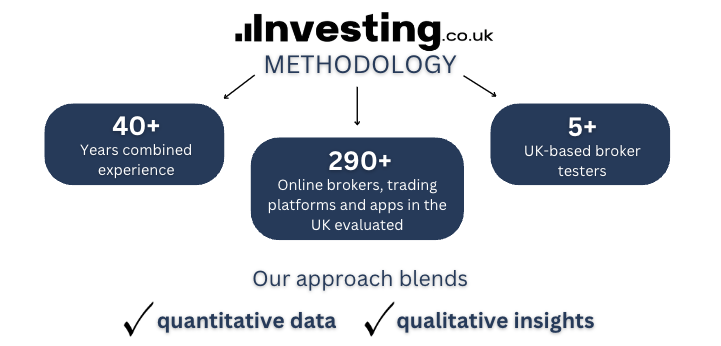
How Investing.co.uk Chose The Top Brokers That Allow Debit Cards
We checked that each firm we’ve recommended accepts debit card deposits by looking in their cashier portals and, if needed, speaking to their support staff.
Brokers were then sorted by our overall ratings, which looks at over 200 factors — including accepted transfer methods, deposit speed, transaction costs, and FCA oversight.
What To Look At When Picking A Debit Card Broker
Fees & Charges
The first question to ask is whether the broker charges for deposits or withdrawals. Some brokers we’ve used cover the cost themselves. Others pass it on to you. Even if the fee looks small, it adds up if you fund your account regularly.
Currency conversion is another cost to watch. If the broker only offers accounts in dollars or euros, you’ll pay extra every time your bank converts pounds. It’s far easier if the broker supports accounts in GBP. That way, you avoid those conversion charges.
Deposit & Withdrawal Speed
Debit card deposits should be instant. If they aren’t, that’s a red flag. But withdrawals are where brokers differ most. Some release funds within a day. Others take three to five business days, and sometimes longer.
A delay might not matter if you’re investing for the long term. However, if you’re trading actively and need fast access to your money, it’s a significant concern.
Check the broker’s stated withdrawal times before signing up, and look for user reviews to see if those claims hold.
Limits
Every broker sets limits on card payments. There are minimums, which can be a problem if you only want to deposit small amounts, and maximums, which matter if you’re trading with larger sums. The same applies to withdrawals.
If you want flexibility, ensure the limits align with your trading style. Nothing’s worse than finding out you can’t move the amount you need when you need it.
Security
Debit cards are generally safe, but it’s still advisable to have strong security measures in place. A reliable broker will use encryption, two-factor authentication, and account verification steps.
One important rule is that withdrawals should only be made using the same debit card that was used for the deposit. This might feel restrictive, but it’s actually a good sign—it reduces the risk of fraud and protects your money.
I appreciate how quickly trading deposits are processed with my debit card, but the stringent security checks stand out. Withdrawing back to the same card feels limiting at first, yet it proves safer in the long run, even if extra ID checks sometimes slow things down.

FCA Regulation
This point is non-negotiable—only use brokers regulated by the Financial Conduct Authority. The FCA sets strict standards for how brokers handle client money. If something goes wrong, you have legal protection.
Some unregulated brokers might accept debit cards and even offer tempting deals, but the risk is high. If they disappear with your funds, you have little chance of getting them back.
Withdrawals: Card vs Bank
One detail that catches traders off guard is how profits are handled. Many brokers we’ve tested only allow you to withdraw to your debit card up to the amount you originally deposited. Anything above that—your profits—often has to be deposited into your bank account instead.
It’s not a problem, but it does affect timing. Bank withdrawals can take longer and may involve extra steps. Knowing this upfront saves surprises later.
Example Scenarios
It may be helpful to envision how this scenario unfolds for different types of traders:
- Small trader: You put in £100 every month. You’ll care most about low minimum deposits and no deposit fees.
- Active trader: You move funds in and out often. Fast withdrawals and low transaction costs are crucial. Even a £5 fee each time will eat into profits.
- Larger investor: You may want to deposit bigger sums. High maximum limits and clear rules on profit withdrawals will be most important.
Are Debit Cards Good For Trading?
Debit cards are part of everyday life in the UK. Most people use them daily for shopping or bills, so it makes sense that they’ve also become the go-to tool funding for online trading.
Unlike e-wallets or bank transfers, debit cards are linked directly to your current account. There are no extra hoops to jump through.
The biggest reason traders choose them is speed. Deposits typically appear instantly, allowing you to take a position right away. Bank transfers, in contrast, might take hours or even days. Withdrawals also tend to move faster with cards, though timing can vary by broker.
That said, ‘fast and easy’ isn’t guaranteed across the board. Some brokers we’ve traded with through debit cards run smooth systems where payments are reliable. Others can be clunky, adding delays or surprise fees. That’s why it pays to know the details before committing.
Common Debit Card Issues In Trading
Even when you use a trusted broker, a few issues can still pop up:
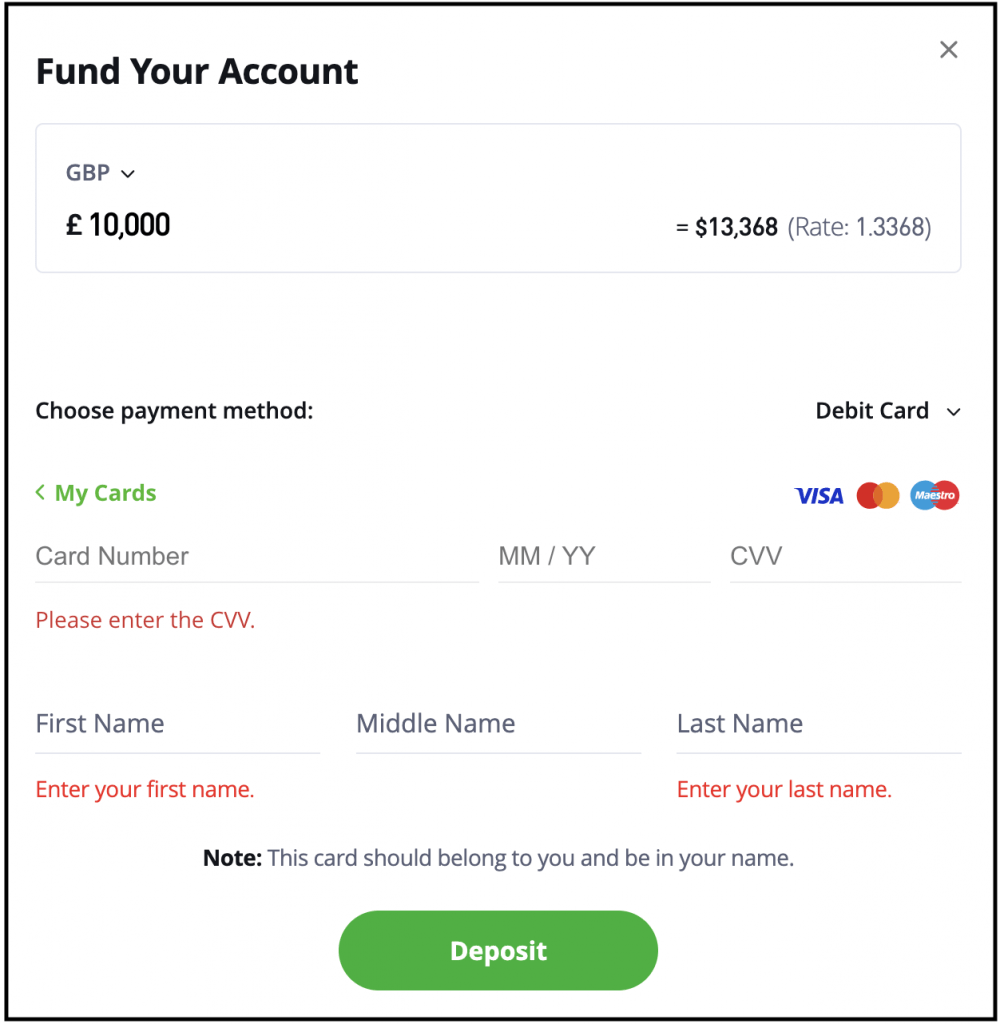
- Declined payments: Banks sometimes block large or unusual transactions until you confirm them.
- Daily limits: Your bank may impose a daily spending limit on your debit card.
- Name mismatch: If the debit card and trading account aren’t in the same name, the broker will likely reject the transaction.
These problems are typical and usually easy to fix, but it helps to be aware of them.
Tips For Smooth Debit Card Funding
You can also take a few steps on your end to keep things running smoothly.
Stick to the same debit card for both deposits and withdrawals. Switching cards mid-way can cause delays. Keep a backup payment method ready in case your card gets blocked. If possible, fund your account in GBP to avoid currency conversion fees.
Test withdrawals early. Don’t leave all your profits sitting in the account. Withdraw regularly so you can verify the process works and identify any issues before they become urgent.
Bottom Line
Using a debit card to fund a trading account in the UK is a quick and straightforward process. However, not all brokers handle it in the same way. Some charge fees. Some have tight limits. Others are slow to release funds.
The best way to avoid headaches is to stick with FCA-regulated brokers and pay attention to the details: cost, speed, limits, and security.
If you cover those bases, you’ll find the best debit card broker that matches how you trade and avoid most of the common problems along the way.