Best ECN Brokers In The UK 2026



ECN (Electronic Communication Network) brokers offer direct market access, tighter spreads, and faster execution—crucial advantages for investors aiming to maximise profits and minimise costs.
We cut through the noise to highlight the top UK ECN brokers that deliver transparency, reliability, and competitive trading conditions.
Top ECN Brokers
-


Tickmill is a worldwide broker regulated by respected authorities like CySEC and FCA. It has attracted hundreds of thousands of traders, executing over 530 million trades. Its edge lies in sophisticated tools, informative resources, and competitive fees.
Instruments Regulator Platforms Forex, CFDs, stocks, indices, commodities, cryptocurrencies, futures, options, bonds FCA, CySEC, FSA, DFSA, FSCA Tickmill Webtrader, MT4, MT5, TradingView Min. Deposit Min. Trade Leverage $100 0.01 Lots 1:1000 -
HYCM, authorised by four global entities including the FCA, is an online broker. It provides short-term CFD trading on forex, shares, commodities, indices, ETFs, and Bitcoin. The broker supports MT4, MT5, and Trading Central analysis.
Instruments Regulator Platforms CFDs, Forex, Stocks, Indices, Commodities, ETFs FCA, DFSA HYCM Trader, MT4, MT5, TradingCentral Min. Deposit Min. Trade Leverage $20 0.01 Lots 1:301:500 -
Founded in 2005, FXOpen is a well-regulated broker that has drawn over one million traders. Tailored for active trading, it offers a diverse range of over 700 markets. The platform facilitates high-frequency trading, scalping, and various algorithmic strategies through the use of expert advisors (EAs).
Instruments Regulator Platforms CFDs, Forex, Stocks, Indices, Commodities, Crypto, ETFs FCA, CySEC, FC TickTrader, MT4, MT5, TradingView Min. Deposit Min. Trade Leverage $100 0.01 Lots 1:30 (EU, UK), 1:1000 (Global) -
In our tests, Pepperstone’s ECN execution consistently delivered speeds under 50ms with minimal slippage, even in volatile markets. The Razor account offered raw spreads starting from 0.0 pips with a $7 commission per lot. Deep liquidity in major currencies provided stable fills, making it ideal for scalpers and high-frequency traders.
Instruments Regulator Platforms CFDs, Forex, Currency Indices, Stocks, Indices, Commodities, ETFs, Crypto CFDs (only Pro clients), Spread Betting FCA, ASIC, CySEC, BaFin, DFSA, SCA, SCB, CMA-Kenya Pepperstone Trading Platform, MT4, MT5, cTrader, TradingView Min. Deposit Min. Trade Leverage $0 0.01 Lots 1:30 (Retail - UK, EU, Australia), 1:500 (Pro), 1:200 (Offshore), 1:400 (Kenya) -
In our recent tests, Eightcap's ECN setup achieved impressive execution speeds of under 45ms and dependable fills, even amidst volatile market peaks. The Raw account features spreads starting from 0.0 pips with a $7 per lot commission. Liquidity remained strong during peak trading periods, catering well to both scalpers and algorithmic traders.
Instruments Regulator Platforms CFDs in Forex, Stocks, Indices, Commodities FCA, ASIC, CySEC, FSC, SCB, FSA MT4, MT5, TradingView, TradeLocker Min. Deposit Min. Trade Leverage £100 0.01 Lots 1:30 -
Using Vantage's ECN Raw account, execution times averaged 30–40ms with minimal slippage in most sessions. EUR/USD spreads often reached 0.0 pips, with a $6 round-turn commission. Liquidity was strong during peak times, ideal for scalpers, EAs, and high-frequency trading.
Instruments Regulator Platforms CFDs, Forex, Stocks, Indices, Commodities, ETFs, Bonds, Spread betting FCA, ASIC, FSCA, VFSC, CIMA ProTrader, MT4, MT5, TradingView, TradingCentral, DupliTrade Min. Deposit Min. Trade Leverage $50 0.01 Lots 1:30 -
In our ECN-style test with FOREX.com, execution averaged 40ms with moderate slippage during rapid market changes. EUR/USD spreads began at approximately 0.1 pips, with a $6 commission per lot. Liquidity was plentiful but somewhat fragmented outside peak hours. Ideal for seasoned traders employing limit-order strategies.
Instruments Regulator Platforms Forex, CFDs, Stock CFDs, Indices, Commodities, Futures, Options, Crypto NFA, CFTC, CIRO, FCA, CySEC, ASIC, FSA, MAS, CIMA, CMA-UAE WebTrader, Mobile, MT4, MT5, TradingView Min. Deposit Min. Trade Leverage $100 0.01 Lots 1:30
 Tickmill
 HYCM
HYCM FXOpen
 Pepperstone
 Eightcap
 Vantage FX
 Forex.com
Safety Comparison
Compare how safe the Best ECN Brokers In The UK 2026 are and what features they offer to protect traders.
| Broker | Trust Rating | FCA Regulated | Negative Balance Protection | Guaranteed Stop Loss | Segregated Accounts |
|---|---|---|---|---|---|
| Tickmill | ✔ | ✘ | ✘ | ✔ | |
| HYCM | ✔ | ✔ | ✘ | ✘ | |
| FXOpen | ✔ | ✔ | ✘ | ✔ | |
| Pepperstone | ✔ | ✔ | ✘ | ✔ | |
| Eightcap | ✔ | ✔ | ✘ | ✔ | |
| Vantage FX | ✔ | ✔ | ✘ | ✔ | |
| Forex.com | ✔ | ✔ | ✘ | ✔ |
Payments Comparison
Compare which popular payment methods the Best ECN Brokers In The UK 2026 support and whether they have trading accounts denominated in British Pounds (GBP).
| Broker | GBP Account | Debit Card | Credit Card | Neteller | Skrill | Apple Pay |
|---|---|---|---|---|---|---|
| Tickmill | ✔ | ✘ | ✘ | ✔ | ✔ | ✘ |
| HYCM | ✔ | ✘ | ✘ | ✔ | ✔ | ✘ |
| FXOpen | ✔ | ✔ | ✔ | ✔ | ✔ | ✘ |
| Pepperstone | ✔ | ✔ | ✔ | ✔ | ✔ | ✔ |
| Eightcap | ✔ | ✔ | ✔ | ✔ | ✔ | ✘ |
| Vantage FX | ✔ | ✔ | ✔ | ✔ | ✔ | ✘ |
| Forex.com | ✔ | ✔ | ✔ | ✔ | ✔ | ✘ |
Mobile Trading Comparison
How good are the Best ECN Brokers In The UK 2026 at mobile trading using apps or other mobile interfaces.
| Broker | Mobile Apps | iOS Rating | Android Rating | Smart Watch App |
|---|---|---|---|---|
| Tickmill | ✔ | ✘ | ||
| HYCM | iOS & Android | ✘ | ||
| FXOpen | iOS & Android | ✘ | ||
| Pepperstone | iOS & Android | ✘ | ||
| Eightcap | iOS & Android | ✘ | ||
| Vantage FX | iOS & Android | ✘ | ||
| Forex.com | iOS & Android | ✘ |
Beginners Comparison
Are the Best ECN Brokers In The UK 2026 good for beginner traders, that might want an affordable setup to get started, along with good support and educational resources?
| Broker | Demo Account | Minimum Deposit | Minimum Trade | Support Rating | Education Rating |
|---|---|---|---|---|---|
| Tickmill | ✔ | $100 | 0.01 Lots | ||
| HYCM | ✔ | $20 | 0.01 Lots | ||
| FXOpen | ✔ | $100 | 0.01 Lots | ||
| Pepperstone | ✔ | $0 | 0.01 Lots | ||
| Eightcap | ✔ | £100 | 0.01 Lots | ||
| Vantage FX | ✔ | $50 | 0.01 Lots | ||
| Forex.com | ✔ | $100 | 0.01 Lots |
Advanced Trading Comparison
Do the Best ECN Brokers In The UK 2026 offer features that allow for more advanced trading strategies?
| Broker | Automated Trading | Pro Account | Leverage | VPS | AI | Low Latency | Extended Hours |
|---|---|---|---|---|---|---|---|
| Tickmill | ✔ | ✘ | 1:1000 | ✘ | ✘ | ✘ | ✘ |
| HYCM | Expert Advisors (EAs) on MetaTrader | ✔ | 1:301:500 | ✘ | ✘ | ✔ | ✘ |
| FXOpen | Expert Advisors (EAs) on MetaTrader | ✘ | 1:30 (EU, UK), 1:1000 (Global) | ✔ | ✘ | ✔ | ✘ |
| Pepperstone | Expert Advisors (EAs) on MetaTrader, cBots on cTrader | ✔ | 1:30 (Retail - UK, EU, Australia), 1:500 (Pro), 1:200 (Offshore), 1:400 (Kenya) | ✘ | ✘ | ✔ | ✘ |
| Eightcap | TradingView Bots | ✘ | 1:30 | ✔ | ✘ | ✔ | ✘ |
| Vantage FX | Myfxbook AutoTrade, Expert Advisors (EAs) on MetaTrader | ✘ | 1:30 | ✔ | ✘ | ✘ | ✘ |
| Forex.com | Expert Advisors (EAs) on MetaTrader | ✘ | 1:30 | ✔ | ✔ | ✔ | ✘ |
Detailed Rating Comparison
Use this heatmap to compare our detailed ratings for all of the Best ECN Brokers In The UK 2026.
| Broker | Trust | Platforms | Mobile | Assets | Fees | Accounts | Support | Research | Education |
|---|---|---|---|---|---|---|---|---|---|
| Tickmill | |||||||||
| HYCM | |||||||||
| FXOpen | |||||||||
| Pepperstone | |||||||||
| Eightcap | |||||||||
| Vantage FX | |||||||||
| Forex.com |
Our Take On Tickmill
"Tickmill stands out for traders, particularly with the Raw account, offering nearly no pip spreads and exceptionally swift order execution."Tobias Robinson
Reviewer
Pros
- Tickmill holds licences from regulators such as the FCA and CySEC, ensuring tangible advantages. Client funds are segregated in secure accounts, and negative balance protection is in place. This guarantees you won't owe more than your deposit, offering reassurance during market fluctuations.
- With the Raw Spread account, spreads are remarkably tight, occasionally reaching zero pips, complemented by a clear per-trade commission. This arrangement minimises trading costs, offering a crucial benefit for frequent trades and eliminating hidden fees that erode profits.
- Drawing from our trading experience, Tickmill consistently executes orders rapidly—averaging around 59 milliseconds—with minimal slippage or requotes. This reliability ensures traders can trust their entry and exit prices without delay, safeguarding against potential costs in fast markets.
Cons
- Tickmill targets forex pairs, select stock CFDs, indices, and limited commodities. If you prefer trading across diverse asset classes like cryptocurrencies or a wider array of stocks, options here are restricted versus brokers offering thousands of instruments.
- If you prefer cTrader's interface and advanced order options, you won't find them here. Tickmill utilises MetaTrader 4 and 5, TradingView, and its own platform but lacks cTrader. This may hinder those who depend on cTrader's features or tools like cTrader Copy.
Our Take On HYCM
"Traders seeking a multi-asset broker with robust platform support, additional analysis tools, and stringent regulation should consider HYCM. The competitive raw-spread accounts benefit scalpers and high-volume traders."Tobias Robinson
Reviewer
Pros
- Instead of a fixed leverage cap, HYCM's model automatically decreases leverage as position volume grows, safeguarding traders from excessive exposure on large trades without manual margin adjustments. Typical retail brokers set a static leverage limit, leaving risk control entirely to traders. The dynamic model provides a structural risk safeguard, especially beneficial for novice traders gradually expanding positions.
- While most retail CFD brokers offer gold, oil, and silver, HYCM goes further by providing agricultural soft commodities. This is available from a standard account without requiring a higher minimum deposit or professional status. For those seeking true commodity diversification beyond metals and energy, such access is unusually available at this level.
- HYCM, established in 1977, has endured events like Black Wednesday, the 2008 financial crisis, the SNB shock, and various FCA regulatory changes that saw many rivals restructure or exit. While many brokers recently obtained FCA regulation, HYCM's longstanding compliance spans a full generation of retail traders. This signifies a uniquely established track record.
Cons
- HYCM still uses the same MT4, MT5, and proprietary mobile app infrastructure from five years ago. There's no TradingView, cTrader, social trading, copy trading, or PAMM available. Despite having nearly 50 years of history and FCA regulation, the lack of platform development shows little focus on technology investment. This is crucial as rivals integrate TradingView and expand social trading to appeal to new retail traders.
- Brokers such as eToro, Pepperstone, and IC Markets have created client acquisition channels centred on social and copy trading. HYCM lacks this approach. This leaves new traders wishing to invest in proven strategies and experienced traders aiming to profit from managing external capital without a platform. Consequently, HYCM fails to serve this segment of retail traders.
- The limitation appears solely in HYCM's terms. Investors opening a Fixed or Classic account, creating a short-term strategy, and executing rapid trades risk having profits seized and accounts suspended without notice. The Raw account allows more precise trading, but the threshold between allowed and forbidden trading frequency is not clearly defined on hycm.com.
Our Take On FXOpen
"FXOpen is perfect for high-volume traders, providing swift execution via its ECN system, spreads starting at 0 pips, and reduced commissions as low as $1.50 per lot."Tobias Robinson
Reviewer
Pros
- In 2024, FXOpen simplified its account options. Traders now benefit from ECN accounts with raw spreads starting at 0.0 pips. The platform offers rapid execution and reduced commissions for those with high trading volumes, enhancing user experience.
- FXOpen integrated TradingView in 2022 and enhanced its TickTrader platform in 2024. This upgrade delivers Level 2 pricing, over 1,200 trading instruments, and sophisticated order options. The platform appeals to both seasoned and high-frequency traders.
- FXOpen significantly cut FX spreads by over 40% in 2022. In 2023, they launched commission-free index trading. These changes make trading more economical for traders.
Cons
- Even with an expanded asset portfolio, FXOpen provides a more limited selection of global stocks, commodities, and cryptocurrencies compared to the leading firm BlackBull. This results in fewer diverse trading opportunities for traders.
- Though FXOpen remains a trusted broker with authorizations from the FCA and CySEC, it lost its ASIC license in 2024 due to 'serious concerns.' Consequently, it no longer accepts traders from Australia.
- FXOpen's educational resources are quite limited, with a scarcity of courses and webinars commonly available at brokers such as IG. This deficiency may deter novice traders looking to enhance their understanding.
Our Take On Pepperstone
"Pepperstone excels in trading with tight spreads, swift execution, and advanced charting for seasoned traders. Beginners enjoy zero minimum deposit, comprehensive educational materials, and outstanding 24/5 support, including 18-hour weekend assistance."Tobias Robinson
Reviewer
Pros
- Recognised customer support is accessible through phone, email, or live chat, with response times under five minutes. Service agents are friendly and well-versed in products and trading tools.
- In recent years, Pepperstone has significantly enhanced the deposit and withdrawal process. By 2025, clients can use Apple Pay and Google Pay, while 2024 saw the introduction of PIX and SPEI for customers in Brazil and Mexico.
- By integrating spread betting via TradingView, Pepperstone offers a streamlined, tax-efficient trading platform with sophisticated analysis tools for financial spread bettors in eligible countries.
Cons
- Although the market range has expanded, crypto CFD options remain somewhat restricted, especially when compared to specialised brokers like Eightcap. Additionally, there is no facility to invest in actual cryptocurrencies.
- Execution might not appear as dependable in rapid markets as headline speeds imply. Our tests showed swift execution at targeted prices. However, community feedback highlights concerns over slippage, stop-loss fills, and order triggers sensitive to spreads amid volatility.
- Overnight holding fees exceed those of some Market Maker brokers (typically Benchmark + 2.5%). Pepperstone suits traders and forex scalpers well but is less ideal for swing traders who keep positions open overnight.
Our Take On Eightcap
"Eightcap excels for traders, offering diverse charting platforms, educational Labs, and AI tools. With over 120 crypto CFDs, it stands out in crypto trading and has won our 'Best Crypto Broker' award twice consecutively." William Berg
Reviewer
Pros
- Eightcap has launched GOLD247, offering 24/7 gold/USD CFD trading with up to 1:20 leverage, 0.01-lot minimums and zero commission for weekend gold traders.
- Eightcap has excelled in all essential trading areas, surpassing all rivals to clinch our 'Best Overall Broker' award for 2024. It also earned the titles of 'Best Crypto Broker' and 'Best TradingView Broker' for 2025.
- In 2026, Eightcap integrated TradeLocker in select areas, establishing itself as the premier regulated broker for this platform. It continues to offer ultra-fast execution and competitive fees for active traders using the charting software.
Cons
- Eightcap must enhance its range of over 800 instruments to rival top competitors like Blackbull Markets, which offers 26,000+ assets, especially improving its limited commodities selection.
- Despite a helpful array of educational guides and e-books in Labs, Eightcap lags behind IG's extensive resources for aspiring traders. IG boasts a dedicated Academy app and features 18 diverse course categories.
- The demo account is available for 30 days, after which it requires a request for extension. This is less convenient than XM's offering, which provides an unlimited demo mode.
Our Take On Vantage FX
"Vantage is an ideal choice for CFD traders looking for a well-regulated broker with access to the dependable MetaTrader platforms. With a swift sign-up process and a minimum deposit of $50, starting trading is simple and fast."Tobias Robinson
Reviewer
Pros
- Opening a live account is both straightforward and swift, requiring under 5 minutes to complete.
- Hedging and scalping strategies are fully permitted without any short-term restrictions.
- The trading software suite is outstanding, featuring the acclaimed MT4 and MT5 platforms.
Cons
- To access optimal trading conditions, a substantial deposit of $10,000 is required. This includes a commission of $1.50 per transaction per side.
- Based on tests, average execution speeds of 100ms to 250ms are slower compared to other options.
- It's unfortunate that some clients must register with the offshore firm, which provides reduced regulatory safeguards.
Our Take On Forex.com
"FOREX.com excels in serving traders of all levels, offering more than 80 currency pairs, spreads starting at 0.0 pips, and competitive commissions. Its robust charting platforms provide over 100 technical indicators and comprehensive research tools."Tobias Robinson
Reviewer
Pros
- With more than two decades of expertise, strong regulatory governance, and numerous accolades, including a second-place finish in our 'Best Forex Broker' awards, FOREX.com is globally renowned as a reliable trading platform.
- FOREX.com provides top-tier forex rates beginning at 0.0 pips, along with attractive cashback rebates up to 15% for dedicated traders.
- The in-house Web Trader remains a top-tier platform for budding traders, featuring an elegant design and more than 80 technical indicators for market analysis.
Cons
- US clients are not protected against negative balances, which means you could end up owing more than your initial deposit.
- Demo accounts are typically limited to 90 days, hindering effective strategy testing.
- FOREX.com's MT4 platform provides around 600 instruments, a notable reduction compared to the more than 5,500 options on its other platforms.
How We Selected The Top ECN Account Brokers
Our UK-based team carried out in-depth testing on a long list of providers, focusing on brokers offering true ECN trading accounts to UK clients.
Each broker was rated based on performance across critical areas: execution speed, slippage, raw spreads, commission structure, and liquidity.
Our final rankings combine hands-on testing with data to highlight the most reliable, low-latency ECN brokers for active traders in the UK.
How To Choose An ECN Broker
- Market coverage determines what assets you can trade. A strong ECN broker should offer deep liquidity across a wide range of markets, including major forex pairs such as GBP/USD, UK indices like the FTSE 100, and even UK-listed stocks or gilts. Broader access to tradable instruments means you can diversify strategies, hedge positions, and take advantage of local market events—all within the same high-speed, low-latency ECN environment. Limited asset access can restrict your ability to respond effectively to UK-specific news and economic shifts.
- Trading platforms directly affect how efficiently and accurately you place trades. Advanced platforms like MT4, MT5 or cTrader offer features such as one-click trading, custom indicators, and access to Level 2 market depth—crucial for analysing liquidity on assets like GBP crosses or FTSE 100 futures. A reliable execution tool ensures minimal lag, accurate pricing, and the ability to automate trades—especially important during fast-moving UK market sessions or key economic releases, such as BoE rate decisions. The wrong platform can limit your speed and strategy execution.
- Order execution performance determines how quickly and accurately your trades are filled at the expected price. In fast-moving UK markets—such as during BoE rate announcements or FTSE 100 earnings seasons—even a fraction of a second delay can lead to slippage, where trades are filled at worse prices than intended. A high-performance ECN broker routes orders directly to liquidity providers with minimal latency, ensuring you capture real market prices, especially on volatile instruments like GBP/USD or UK government bonds. Poor execution can eat into profits or turn winning trades into losses.
- Fees and costs directly impact your bottom line. ECN brokers typically charge tight raw spreads plus a fixed commission per trade, which can add up quickly—especially if you’re trading actively. Unlike brokers who build costs into wider spreads, ECN brokers separate these fees, so you need to calculate your total trading cost precisely. Understanding how commissions affect your returns is crucial, particularly when trading during volatile sessions where volume—and expenses—can spike.
- Analytical features enhance your ability to interpret the market and manage trades in real-time. Quality platforms should offer tools such as economic calendars, depth-of-market views, and automated strategy support. These features enable you to respond to events such as BoE updates or GDP releases. Without robust analytical features, your ability to make timely, informed decisions is limited—no matter how fast your execution is.
- Leverage allows you to control larger positions with a smaller amount of capital, thereby amplifying both potential profits and risks. FCA-regulated brokers typically cap leverage at 1:30 for major forex pairs, such as GBP/USD, and lower for more volatile assets, including UK equities or indices. While leverage can enhance returns during strong market moves, it also increases your exposure to losses. The right broker should offer flexible leverage options with proper risk management tools.
- Trading accounts determine your access to spreads, commission rates, minimum deposits, and execution conditions. Some brokers offer raw spread accounts with lower spreads and fixed commissions, ideal for active trading, while others provide commission-free accounts with slightly wider spreads, better suited for beginners. It’s also important to look for accounts that support GBP as a base currency, which avoids conversion fees.
- Capital thresholds and payment methods affect how easily you can start trading and manage your funds. Some ECN brokers require higher initial deposits—often £200 or more—due to the professional-grade execution and access to deep liquidity pools needed for trading assets like GBP/USD or FTSE 100 CFDs. Additionally, flexible funding options that include UK-friendly methods, such as Faster Payments, PayPal, or debit cards, help ensure smooth and fast transactions without unnecessary currency conversion fees or delays, enabling you to react quickly to market opportunities.
- Reliable support helps you resolve execution problems, platform glitches, or funding concerns quickly—minimising costly downtime or missed opportunities. Brokers offering 24/5 UK-based support and multiple contact channels (live chat, phone, email) provide peace of mind, ensuring you’re never left stranded when precision and timing are critical.
- A regulated broker ensures that your funds and personal data are protected under strict rules set by authorities such as the FCA in the UK. Regulation ensures transparent pricing and fair execution. Additionally, licensed brokers must hold client funds in segregated accounts and participate in compensation schemes, giving you extra security against broker insolvency or malpractice.
Using an ECN broker is like stepping onto the trading floor—when I trade I can see real liquidity, feel the momentum, and trust that every price comes straight from the market, not a middleman.
What Is An ECN Broker?
An ECN broker acts as a direct bridge, connecting traders to the global financial markets by linking them with multiple liquidity providers, including banks, hedge funds, and other traders.
Unlike traditional brokers, ECN brokers like IC Markets and Fusion Markets don’t take the other side of your trade. Instead, they route your orders directly into the market. This means you’re trading ‘in the raw’ with access to real-time prices, tighter spreads, and greater transparency.
How does this work in practice? When you place a trade through an ECN broker, your order enters a digital network where it’s matched with the orders of other market participants.
This system fosters a competitive environment where prices fluctuate based on actual supply and demand, often leading to more favourable pricing and faster execution.
When evaluating an ECN broker, check if they offer access to Level 2 pricing, which displays the full order book depth and allows you to see the available liquidity at each price level. It’s a powerful tool that reveals market sentiment and can help you time entries and exits more effectively, especially in fast-moving UK markets.
ECN brokers typically charge a small commission per trade, rather than generating revenue from widening spreads, which aligns their interests more closely with those of traders.
ECN brokers differ from other types, such as STP (Straight Through Processing) brokers and market maker brokers.
STP brokers also send your orders directly to liquidity providers, but typically mark up spreads slightly to cover their costs, striking a balance between transparency and ease of use.
Market Makers, on the other hand, act as the counterparty to your trades—they ‘make the market’ by setting their bid and ask prices, which can lead to wider spreads and potential conflicts of interest.
If you prioritise transparency, speed, and actual market pricing, ECN brokers generally offer the most direct and fair trading environment.
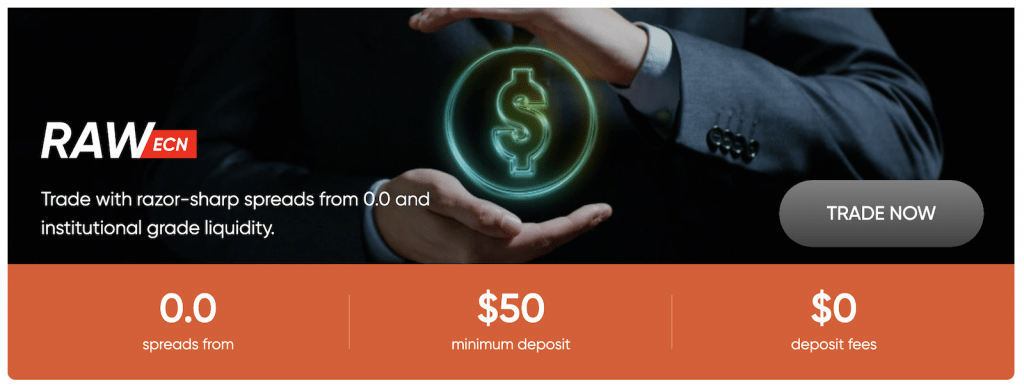
Vantage’s RAW ECN account offers you greater control over your trades
Pros Of ECN Accounts
- Tighter spreads from deep liquidity pools: ECN brokers aggregate quotes from multiple liquidity providers—such as tier-one banks and institutional traders—resulting in ultra-competitive, variable spreads. During high-liquidity periods, spreads can drop close to zero (e.g., 0.1 or 0.2 pips on major GBP forex pairs), which significantly reduces trading costs, especially for high-frequency or scalping strategies. Since ECN brokers don’t manipulate spreads for profit, you benefit from actual market conditions without artificial widening.
- No dealing desk intervention: Unlike market makers, ECN brokers don’t operate a dealing desk, meaning they never take the opposite side of your trade. Instead, orders are matched anonymously within the ECN, ensuring non-conflicted execution. This eliminates issues like price manipulation, requotes, or intentional slippage. Moreover, ECN brokers typically support advanced order types (e.g., limit orders inside the spread) and partial fills, which are crucial for algorithmic or institutional-style trading.
- Transparent trading environment: One of the standout features of ECN brokers is complete pricing transparency. You can often see the full depth of the market (Level 2 data), which displays all bid/ask quotes and order volumes in real-time. This visibility provides an edge in analysing order flow, gauging market sentiment, and timing entries with precision. For technically minded traders, this transparency supports more informed decisions and aligns well with data-driven strategies.
Cons Of ECN Accounts
- Commission-based fee structure can add up: While ECN brokers offer razor-thin spreads, they typically charge a fixed commission per trade, often per lot (e.g., £4–£7 round-trip per standard lot). For high-frequency traders or those placing many small trades, these commissions can quickly erode profits—especially in low-volatility markets where price movement is minimal. Unlike with STP brokers, where costs are built into wider spreads, you must manage cost-per-trade more carefully to maintain profitability.
- High sensitivity to market volatility & slippage: ECN brokers provide true market access, which means you’re directly exposed to natural market conditions, including price spikes, gaps, and slippage—particularly during major news events or low-liquidity periods. Unlike Market Makers, who may buffer execution during high volatility, ECN platforms do not guarantee fills at your requested price. Orders are filled based on real-time liquidity, so even with faster execution, partial fills or execution at worse-than-expected prices can occur, especially with large order sizes.
- Higher minimum deposits & more complex platforms: Because ECN brokers cater to more experienced traders and institutions, they often require higher minimum deposits (e.g., £500–£1,000+) and offer advanced trading platforms, such as cTrader and MT5. These platforms provide tools like Level 2 data, one-click trading, and complex order types—but can overwhelm beginners unfamiliar with depth of market (DOM) views or fast-paced execution settings. The steeper learning curve may deter casual traders.
Trading through an ECN broker taught me the value of raw pricing—when I’m no longer second-guessing spreads or hidden markups, my focus shifts entirely to strategy and execution.
Bottom Line
Choosing the best ECN broker requires a careful balance of factors tailored to your trading style and goals. Look for brokers that offer direct market connectivity with competitive costs, fast and transparent order execution, and robust platforms equipped with advanced analytical tools.
Ensure the FCA fully licenses them to provide security and trust, and consider the range of tradable UK assets and account options available.
By prioritising these elements, you can find a broker that effectively supports both your trading ambitions and risk management needs.
To get started, dig into our choice of the top ECN account brokers.